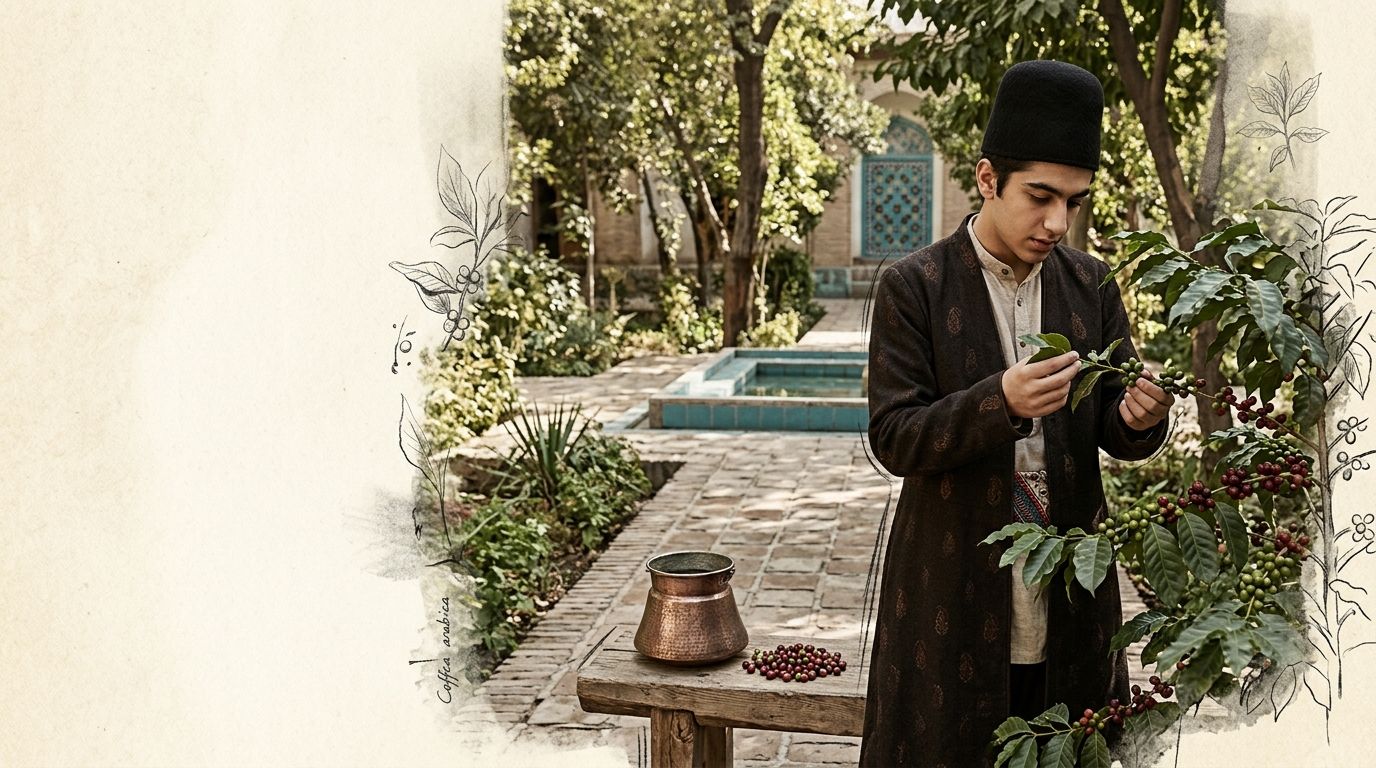







The accounting ledgers had been optimistic. Based on the yield of the estate’s pomegranate and pistachio orchards, the prince’s head agriculturalist had calculated that the newly planted coffee garden should produce at least fifty man (a traditional Persian unit of weight) of prime, export-quality coffee by its fourth year.
It was a calculation born of arrogance, completely ignoring the fundamental laws of botany.
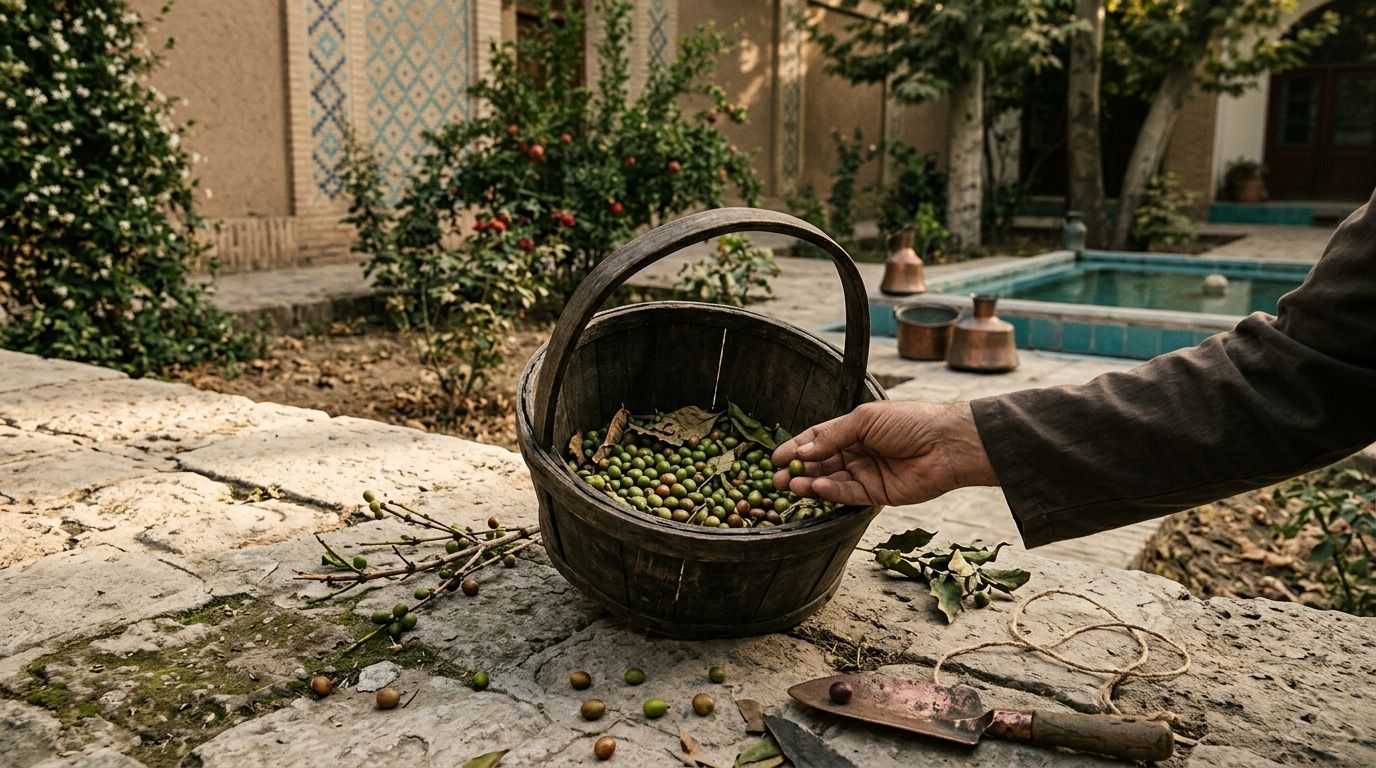
When the fourth autumn finally arrived, there was no need for carts or laborers to haul the harvest. The head gardener simply walked into the courtyard, his head bowed, carrying a single, blue-glazed ceramic bowl. Inside the bowl lay a handful of stunted, hardened red cherries.
The first coffee harvest was not just a failure; it was a physical humiliation.
The Hostility of the Soil
To understand why the harvest failed so catastrophically, we must look beneath the soil.
The Persian garden is an architectural marvel, but its foundation rests on the alkaline earth of the Iranian plateau. The soil is rich in calcium carbonate, giving it a high pH. Coffea arabica, having evolved in the volcanic, highly acidic soils of the East African highlands, cannot properly absorb nutrients in alkaline conditions.
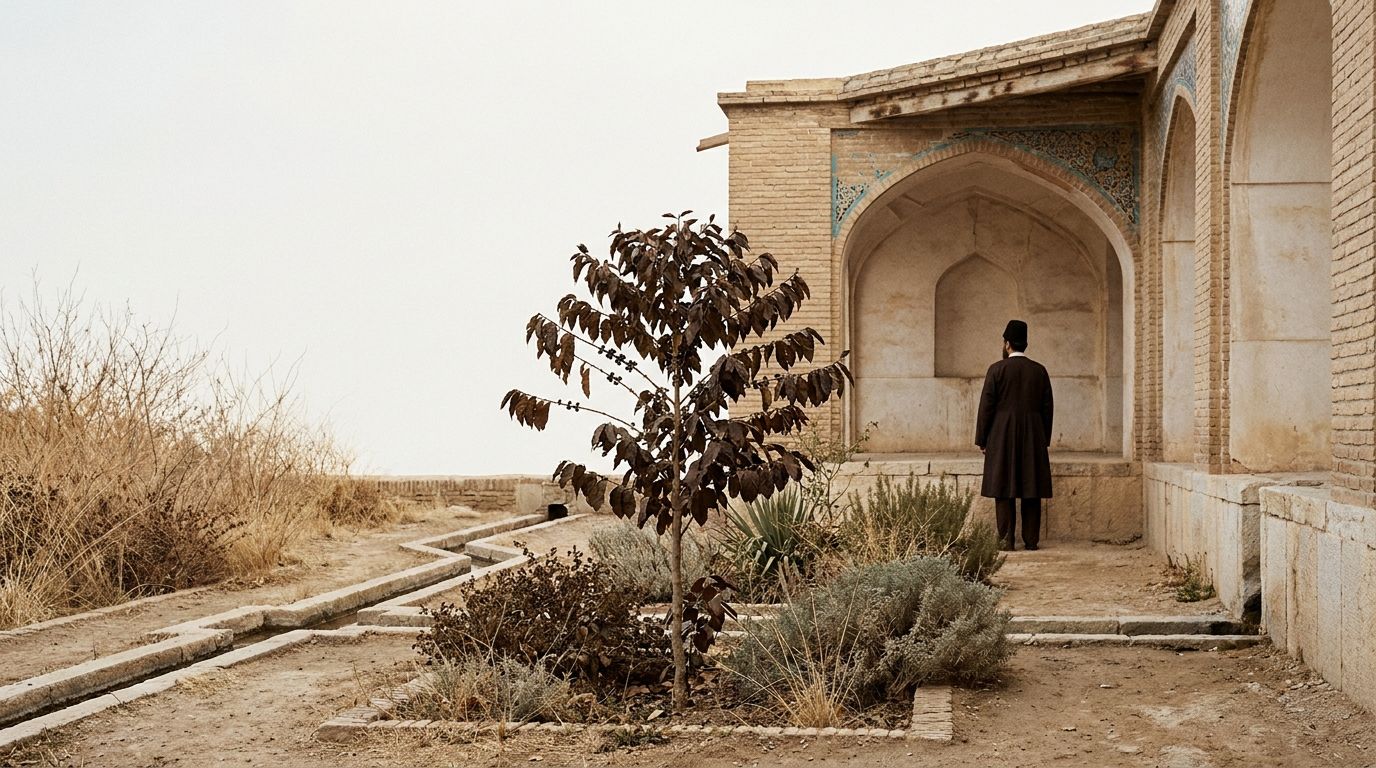
For four years, the imported coffee shrubs had been slowly suffocating. Their roots could not pull iron or magnesium from the earth. Their leaves, which should have been a deep, glossy emerald, had turned a sickly, pale yellow—a classic symptom of chlorosis. The plants were starving to death while standing in flooded irrigation channels.
The Trauma of the Wind
Above ground, the situation was worse.
Coffee is an understory plant. It evolved to grow in the dappled shade of massive tropical canopies, shielded from direct equatorial sun and violent winds. In the prince’s garden, despite the high mud-brick walls and the protective poplars, the dry, searing summer winds (bad-e-garm) managed to penetrate the enclosure.
The wind stripped the moisture from the coffee leaves faster than the damaged roots could replace it. When the shrubs desperately attempted to flower in the spring, producing delicate, jasmine-scented white blossoms, the dry wind blasted them off the branches before they could be pollinated.
Out of a thousand potential blossoms, only a few dozen managed to set fruit.
A Bowl of Stunted Ambition
The prince stared at the ceramic bowl on the table. He picked up one of the cherries. It was not plump or heavy with sugar. It was small, asymmetrical, and hard as wood.
The plant had dedicated all its remaining, desperate energy simply to staying alive. It had nothing left to give to the fruit. There would be no roasting. There would be no dark, intoxicating brew to serve to his rivals. There was only the brutal realization that wealth and water cannot override the deep, genetic requirements of a seed.
He dropped the cherry back into the bowl. It made a hollow, rattling sound against the ceramic.
Historical Reality
The biological requirements of Coffea arabica (acidic soil, high humidity, stable temperatures between 15°C and 24°C) are diametrically opposed to the agricultural realities of the Iranian plateau (alkaline soil, extreme aridity, freezing winters, and scorching summers). While Qajar elites successfully cultivated many imported crops, the failure of any attempted coffee cultivation was biologically guaranteed, resulting in the stunted, chlorotic plants described in this reconstruction.
The QHVE Question
We often believe that human engineering can overcome any natural limitation. When does agriculture stop being cultivation, and start becoming torture?
Sources:
- Wintgens, Jean Nicolas (Ed.). Coffee: Growing, Processing, Sustainable Production.
- Floor, Willem. Agriculture in Qajar Iran.
- Hobhouse, Penelope. Gardens of Persia.
SEO & Meta
SEO Title: Why Coffee Can’t Grow in Iran | The Failure of Qajar Agriculture
Meta Description: A literary reconstruction detailing the biological and climatic reasons why early aristocratic attempts to cultivate coffee in 19th-century Persia ended in disaster.
URL Slug: first-coffee-harvest-was-a-disaster
Tags: Agriculture, Botany, History, Qajar Era, Coffee Cultivation
Primary Search Intent: Informational / Educational
Related Search Queries: why doesn’t Iran grow coffee, coffee plant soil requirements, Qajar agriculture history, Persian garden soil.
Social Version
Instagram / X Hook: They expected fifty heavy sacks of premium coffee. What the gardeners actually brought into the courtyard fit inside a single ceramic bowl. When 19th-century Persian aristocrats tried to grow coffee, they fought a losing battle against the alkaline soil, the scorching winds, and the fundamental laws of botany. Read the story of a catastrophic harvest at QHVE.
Short-form Video Concept:
- 0:00 - 0:05: Wide shot of a grand, wealthy Persian courtyard. (Voiceover: “The prince expected a massive harvest. A triumph of agriculture.”)
- 0:05 - 0:15: Close-up of a gardener setting down a single, small bowl containing a few sad, stunted cherries. (Voiceover: “This was all they got. A handful of hard, stunted fruit.”)
- 0:15 - 0:25: Visuals of dry cracked earth and pale, dying leaves. (Voiceover: “Coffee needs acidic, volcanic soil and tropical shade. The alkaline earth of Iran was slowly starving the plants to death.”)
- 0:25 - 0:35: (Voiceover: “The dry winds blew the blossoms off before they could fruit. Wealth can buy seeds, but it can’t change the climate. Read the full story at QHVE.”)