






Agriculture is not just the act of putting a seed in the ground. It is the inheritance of a cultural memory.
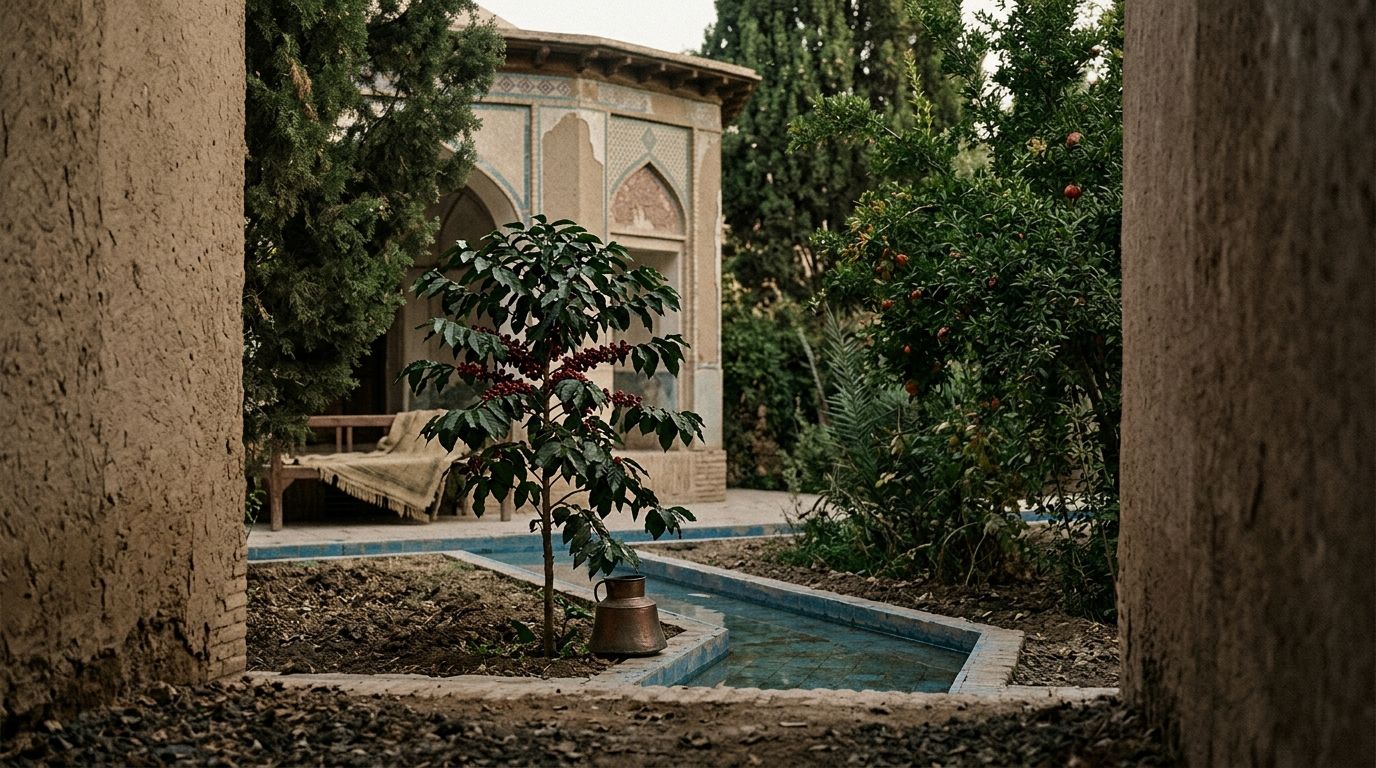
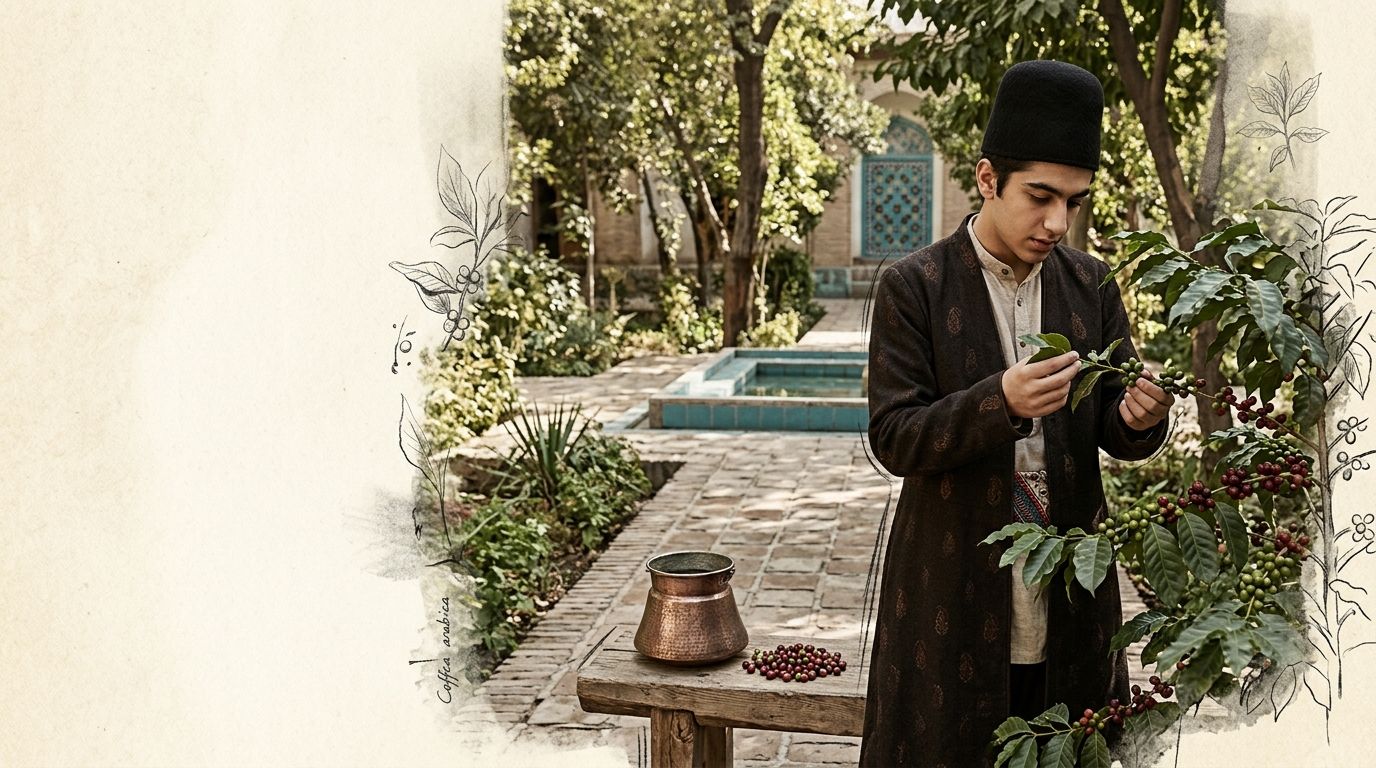
When a 19th-century Persian aristocrat sought to cultivate his own coffee, he believed the battle was won the moment the shrub produced its first red cherries. He had the wealth to import the seeds. He had the power to engineer the perfect micro-climate in his walled garden. He had the water to keep the plants alive against the brutal heat of the Iranian plateau.
He had the fruit. But nobody had told him how coffee actually worked.
The Invisible Mucilage
To look at a ripe coffee cherry is to look at a deception. It resembles a small, firm grape or a stunted cherry. A Persian gardener, familiar with pomegranates, persimmons, and stone fruit, would intuitively treat the coffee cherry as just another fruit to be dried in the sun or peeled.
But the magic of coffee does not exist in the skin, nor in the thin layer of sweet pulp. It exists in the two dense, rock-hard seeds buried inside. And clinging to those seeds is a layer of mucilage—a sticky, sugar-rich pectin that is almost impossible to remove mechanically.
If you simply pick a coffee cherry and leave it in a bowl, the mucilage will ferment uncontrollably. Within a few days, it will begin to rot, infecting the seeds inside with the pungent, sour taste of mold and vinegar.
The Missing African Knowledge
For centuries, the Indigenous farmers of Ethiopia and the Sufi cultivators of Yemen had perfected the art of processing. They knew that the cherries had to be carefully dried on raised beds for weeks, turned by hand every few hours to prevent mold (the Natural Process). Or, they knew the fruit had to be depulped and the sticky seeds soaked in fermentation tanks until the mucilage broke down just enough to be washed away (the Washed Process).
This was not written in any botanical textbook available in Tehran. It was a lived, tactile knowledge, passed down through generations of hands working under an equatorial sun.
When our Qajar prince proudly harvested his first bowl of red cherries, he handed them to his cooks. They did what made logical sense: they peeled the skin off, found the sticky, pale seeds, and laid them out on a copper tray in the kitchen to dry.
The Taste of Rot
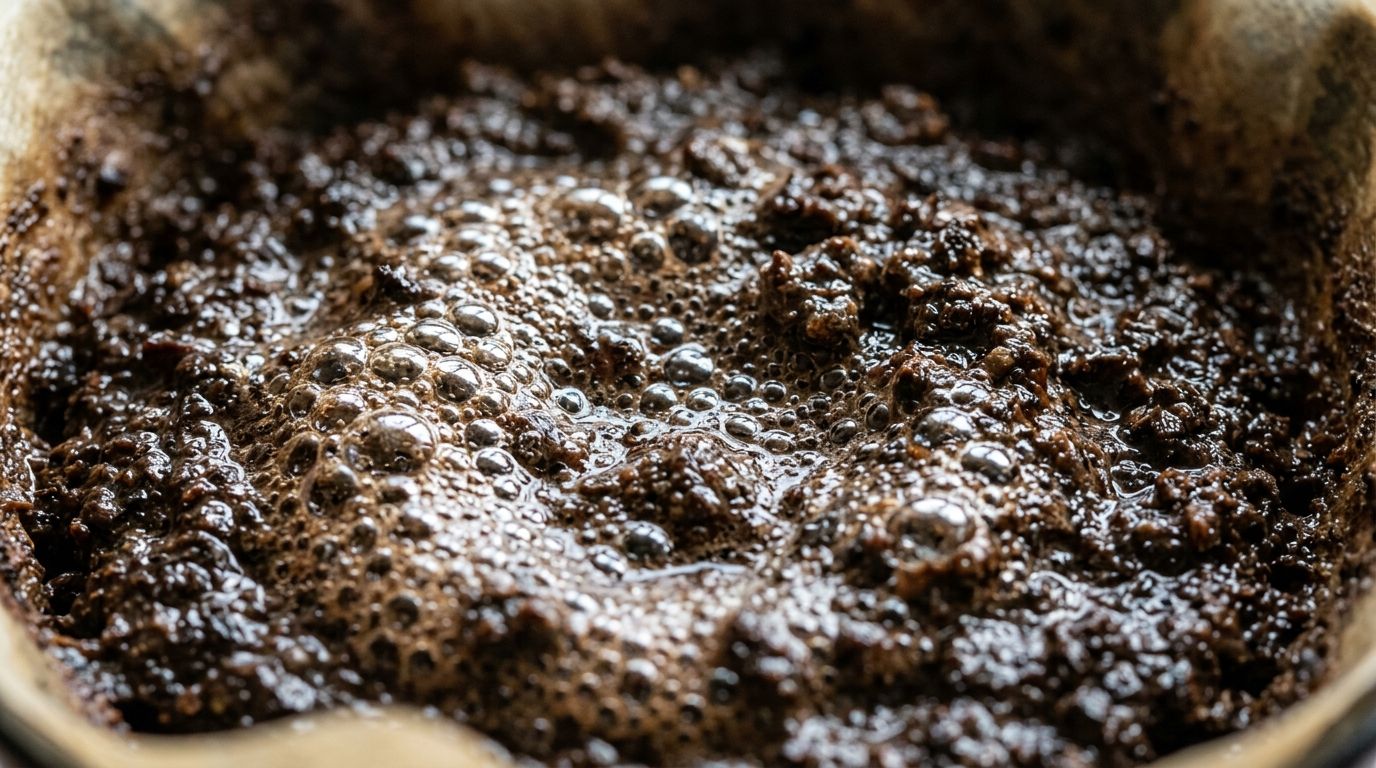
Without the controlled fermentation or the intense, rapid drying of the Arabian sun, the sticky mucilage on the prince’s coffee seeds began to rot.
Fungi bloomed across the copper tray. The seeds turned a mottled, sickly brown. When the cooks finally attempted to roast the tainted beans, the kitchen did not fill with the rich, chocolatey aroma of imported Yemeni coffee. It smelled of burning compost.
The resulting brew was an acidic, foul-tasting disaster. The prince, humiliated by the taste of his own harvest, likely blamed the soil, the water, or the merchants who sold him the seeds. He did not realize that he had succeeded as a botanist, but failed because he lacked the ancient, invisible software of the African farmer.
Historical Reality
The disconnect between agricultural production and processing is a recurring theme in global botanical history. While the Qajars successfully imported and domesticated many foreign crops (like new varieties of tobacco and cotton), coffee’s processing requirements are famously counter-intuitive. The failure to understand post-harvest fermentation is one of the primary reasons coffee cultivation remained geographically locked to its cultures of origin for centuries before European colonial powers violently industrialized the process in their own tropical territories.
The QHVE Question
When we import a foreign idea, how much of its success depends on the invisible, unwritten cultural knowledge we left behind?
Sources:
- Pendergrast, Mark. Uncommon Grounds: The History of Coffee and How It Transformed Our World.
- Matthee, Rudi. The Pursuit of Pleasure.
- Clarence-Smith, W. G. The Global Coffee Economy in Africa, Asia, and Latin America, 1500–1989.
SEO & Meta
SEO Title: Why Early Coffee Cultivation Failed | The Secret of Coffee Processing
Meta Description: A cultural essay exploring why 19th-century attempts to grow coffee outside its native range failed due to a lack of Indigenous knowledge regarding fermentation and processing.
URL Slug: nobody-told-prince-how-coffee-worked
Tags: Coffee Processing, History, Agriculture, Qajar Era, Botany
Primary Search Intent: Informational / Educational
Related Search Queries: History of coffee processing, how is coffee fermented, why is coffee hard to grow, Qajar era agriculture.
Social Version
Instagram / X Hook: Growing a coffee tree is only half the battle. In 19th-century Persia, aristocrats possessed the wealth to import exotic coffee seeds and the gardens to grow them. But when the trees produced fruit, they realized a terrible truth: nobody had told them how to process it. Without the ancient, unwritten African knowledge of fermentation, their harvest simply rotted on the tray. Read the story of the missing knowledge at QHVE.
Short-form Video Concept:
- 0:00 - 0:05: Close-up of a sticky, peeled coffee seed. (Voiceover: “The prince grew the coffee. But he didn’t know what to do next.”)
- 0:05 - 0:15: Archival sketches of Qajar kitchens. (Voiceover: “He gave the red cherries to his cooks. They peeled them and left them to dry.”)
- 0:15 - 0:25: Fast-forward visual of mold growing on a sticky surface. (Voiceover: “But coffee seeds are covered in mucilage. Without controlled fermentation, they don’t dry. They rot.”)
- 0:25 - 0:35: Visual of a ruined, foul-tasting cup of coffee. (Voiceover: “He had the wealth. He had the water. But he lacked the thousand-year-old knowledge of the African farmer. Read the full essay at QHVE.”)