







Moka Pot
A traditional stovetop percolator that uses steam pressure to create a dense, intense, and syrupy coffee similar to espresso.
Pre-heating the Water
Boil water in a separate kettle. Fill the lower chamber of the Moka Pot with this hot water up to just below the safety valve. Using pre-heated water prevents the coffee grounds from "baking" in the metal filter while waiting for cold water to boil on the stove.
Preparing the Basket
Fill the filter basket entirely with your ground coffee. Level the surface using your finger, but do not tamp or press the grounds down. The Moka Pot relies on a loose bed for steam to pass through safely.
Assembly
Drop the filter basket into the hot lower chamber. Using a towel to protect your hands from the heat, tightly screw the top collection chamber onto the base.
The Brew
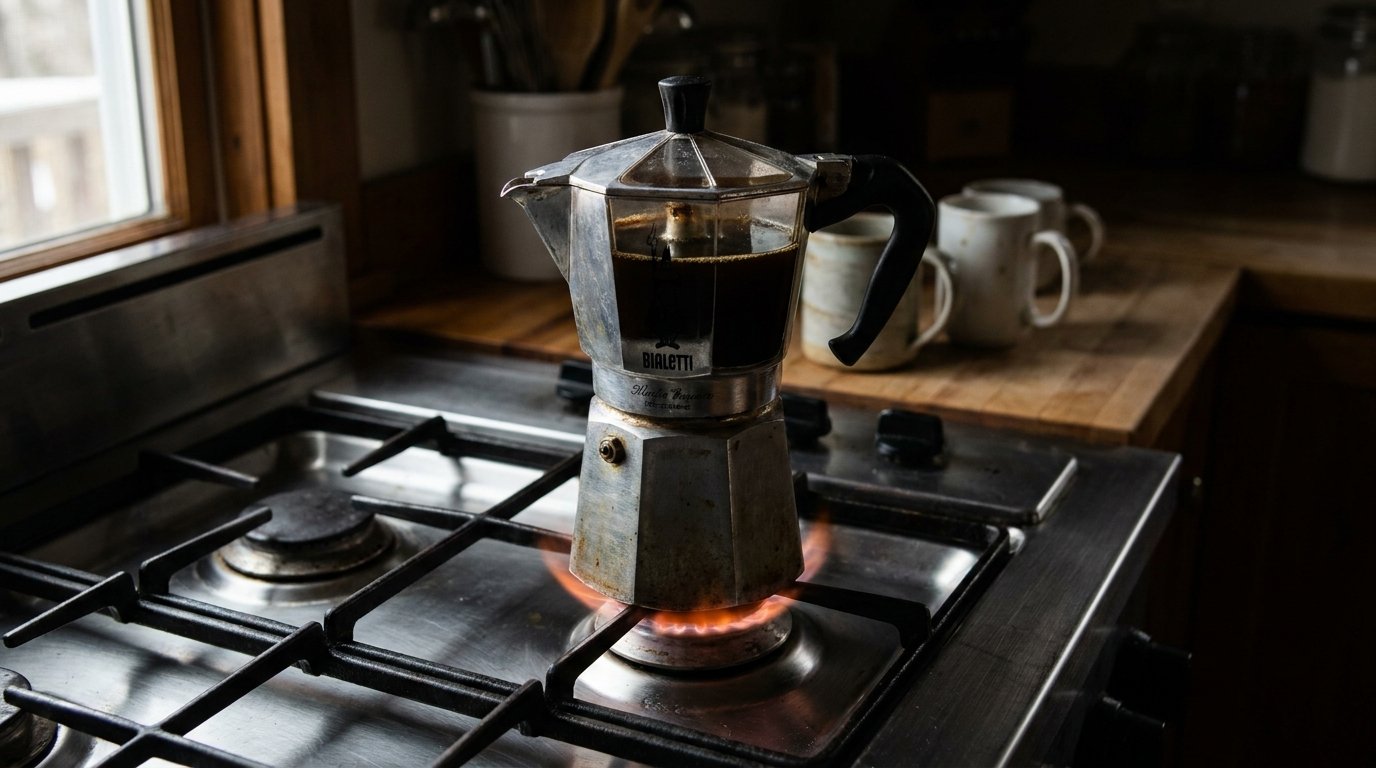
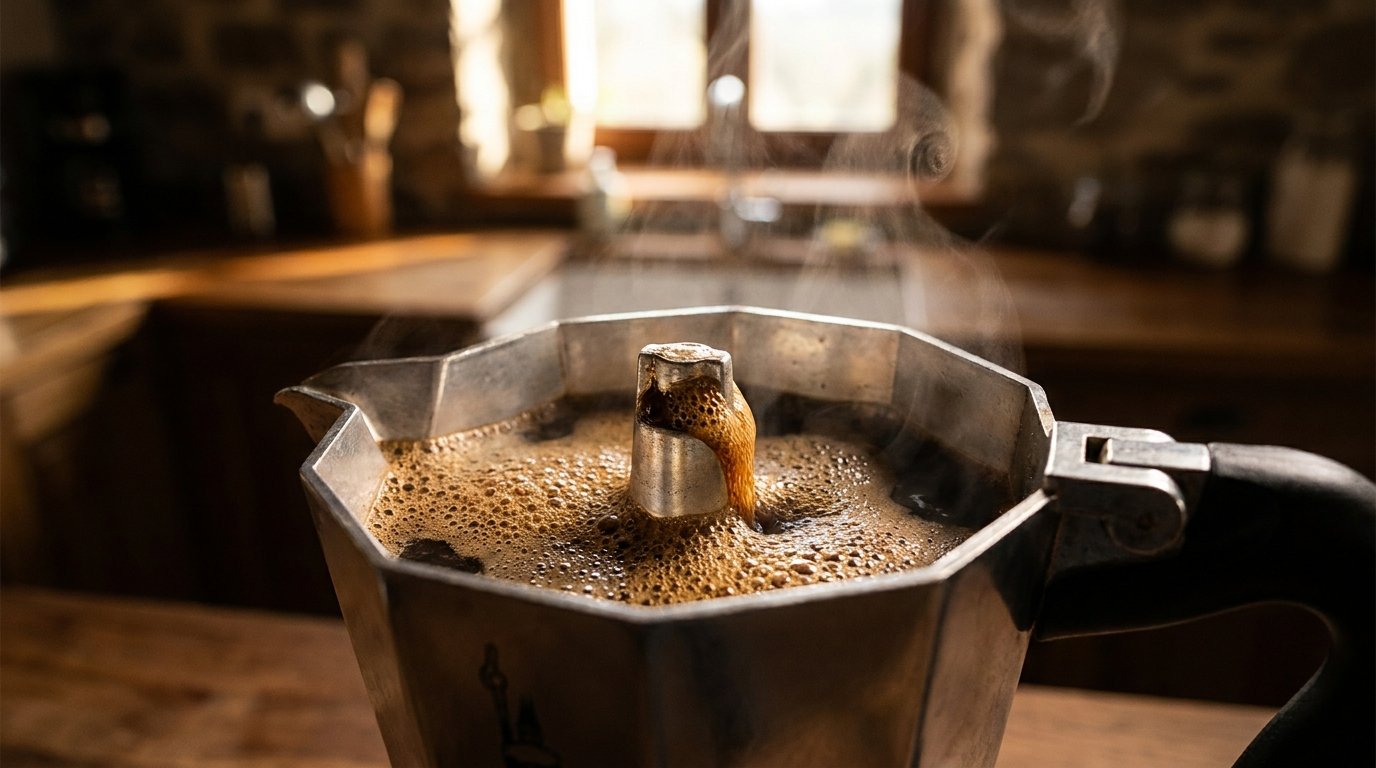
Place the assembled pot on the stove over medium-low heat. Leave the lid open so you can observe the extraction. The coffee will soon begin to flow out of the central spout in a rich, dark stream.
Heat Management and Service
When the stream begins to turn pale and blond, or when you hear the distinct sputtering sound of steam escaping, immediately remove the pot from the heat. You can run the base under cold tap water to instantly halt the extraction. Serve immediately.
Patented by Alfonso Bialetti in 1933, the Moka Pot revolutionized home coffee brewing in Italy. Its brilliant art deco design utilizes boiling water to generate steam pressure in the sealed bottom chamber, forcing the remaining water up through a bed of ground coffee and into the top collection chamber.
While it is often affectionately called a “stovetop espresso maker,” the Moka Pot achieves only about 1 to 2 bars of pressure (compared to the 9 bars of a commercial espresso machine). Therefore, it does not produce true espresso or thick crema, but it does yield a highly concentrated, syrupy brew that pairs exceptionally well with milk. The most common mistake made with a Moka Pot is starting with cold water and using high heat, which invariably leads to metallic, bitter, and over-extracted coffee. Managing the heat and stopping the brew before it sputters is the secret to a sweet, balanced cup.