





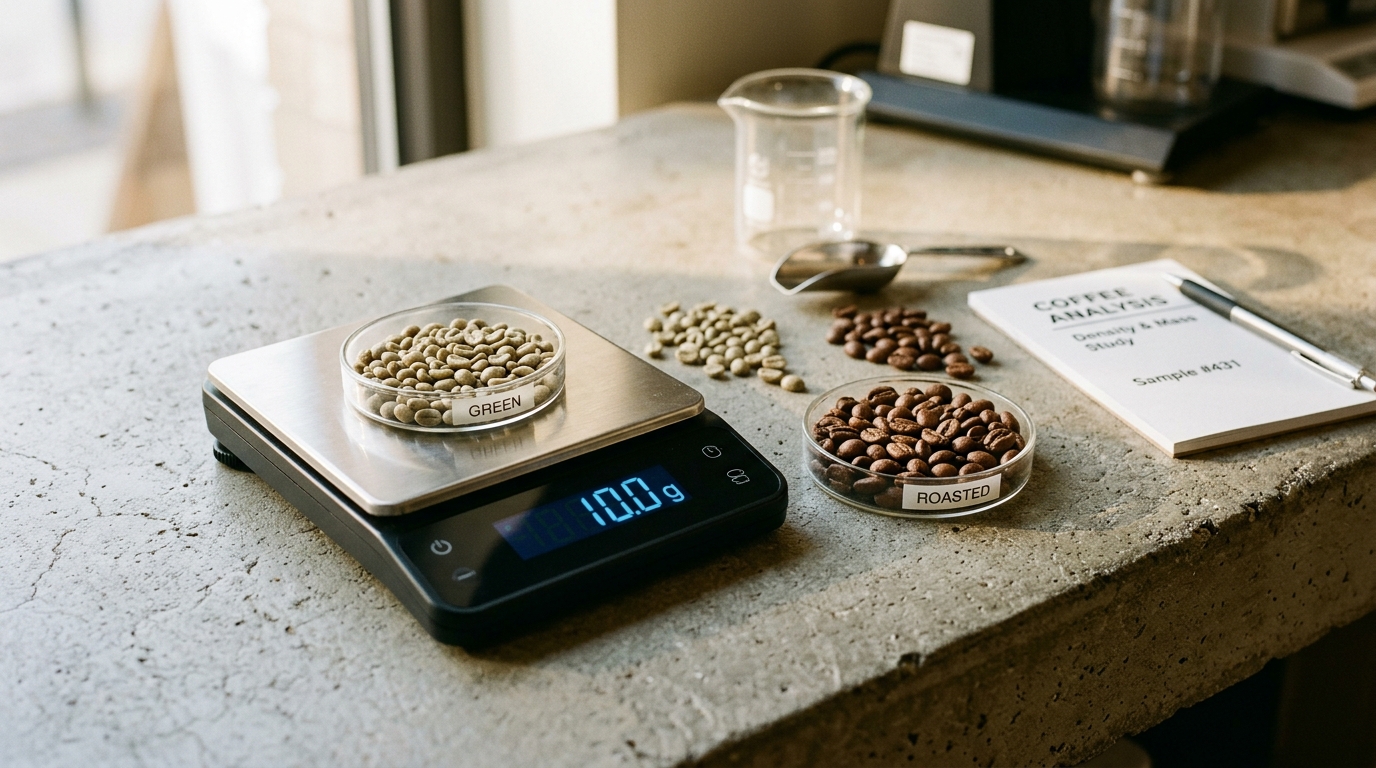
For generations, the standard unit of measurement for brewing coffee at home was the scoop. A scoop of grounds per cup of water seemed like a logical, repeatable system. However, the advent of precision brewing highlighted a fundamental flaw in this logic: the volume of a coffee bean is completely disconnected from its mass.
During the roasting process, heat causes the cellular structure of a coffee bean to expand significantly, while simultaneously driving off moisture and causing a loss of mass. Therefore, a dark roasted bean is physically much larger, but significantly lighter, than a dense, light-roasted bean.
If you use a volumetric scoop to measure a dark roast, you might be grabbing 12 grams of coffee. If you use that exact same scoop for a light roast, the dense beans will pack tightly together, yielding 18 grams of coffee. This massive 6-gram discrepancy will completely alter your brew ratio, turning a balanced recipe into a sour, under-extracted disaster.
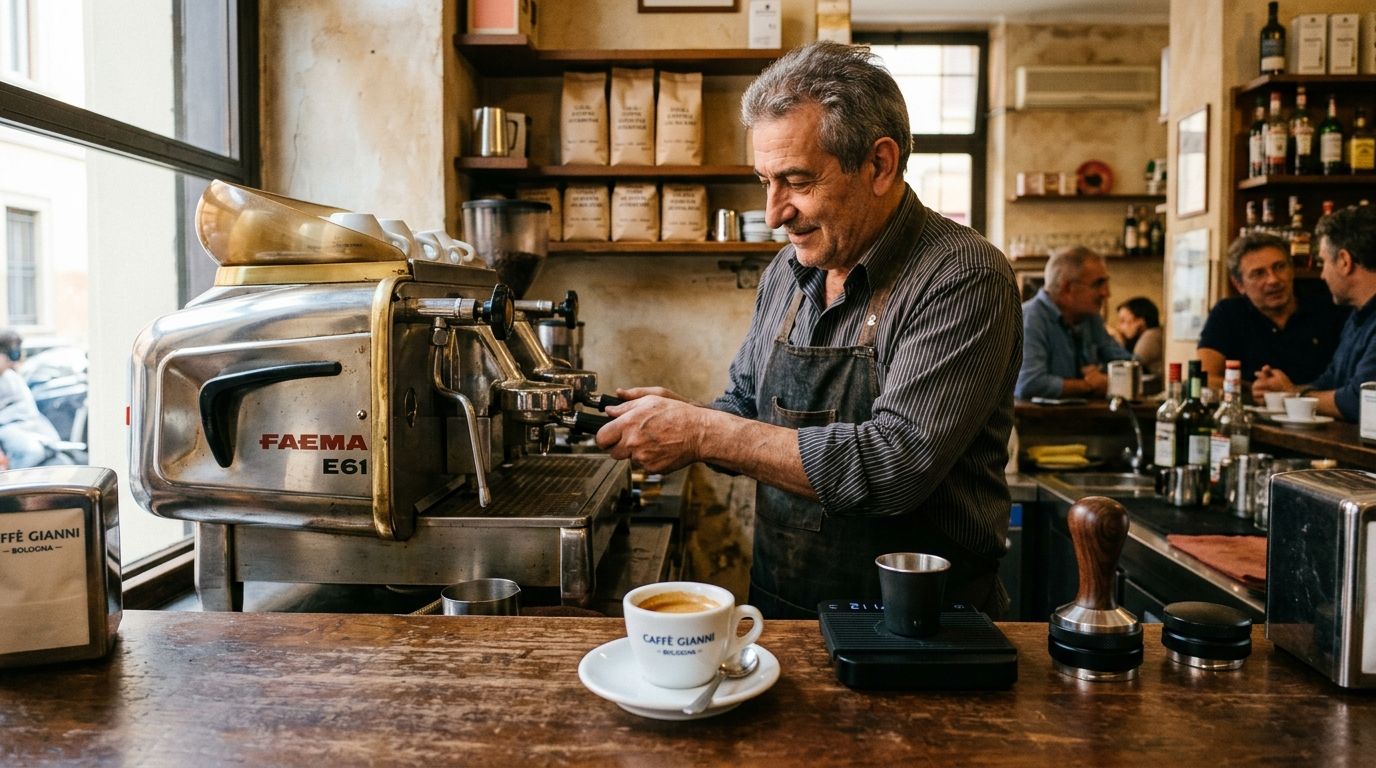
This is why the digital scale is the most critical piece of equipment in a modern coffee setup. By measuring dry dose and liquid yield in grams, the brewer completely eliminates the chaotic variable of density, establishing a rigid, mathematically repeatable foundation for extraction.