





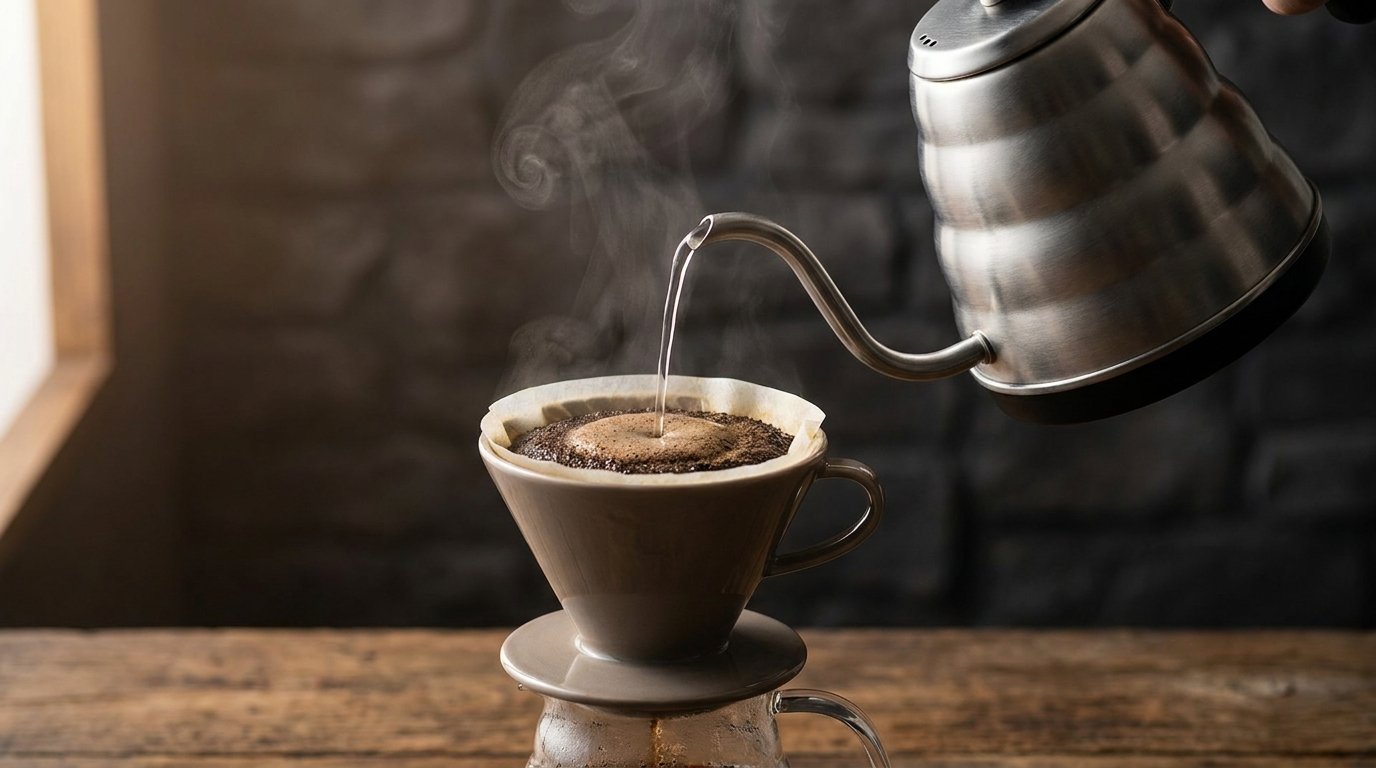
Human sensory perception is highly susceptible to cognitive bias. When we look at a bag of coffee covered in vibrant pink floral designs, with a label declaring notes of “strawberry and rose,” our brain immediately primes the olfactory bulb to detect those exact compounds.
In many cases, we taste what we are told to taste. This psychological priming makes objective evaluation incredibly difficult. Even the visual color of the roasted bean heavily dictates our expectations; we assume a dark, oily bean will taste bitter and chocolatey, and our brain will artificially amplify those traits during consumption.
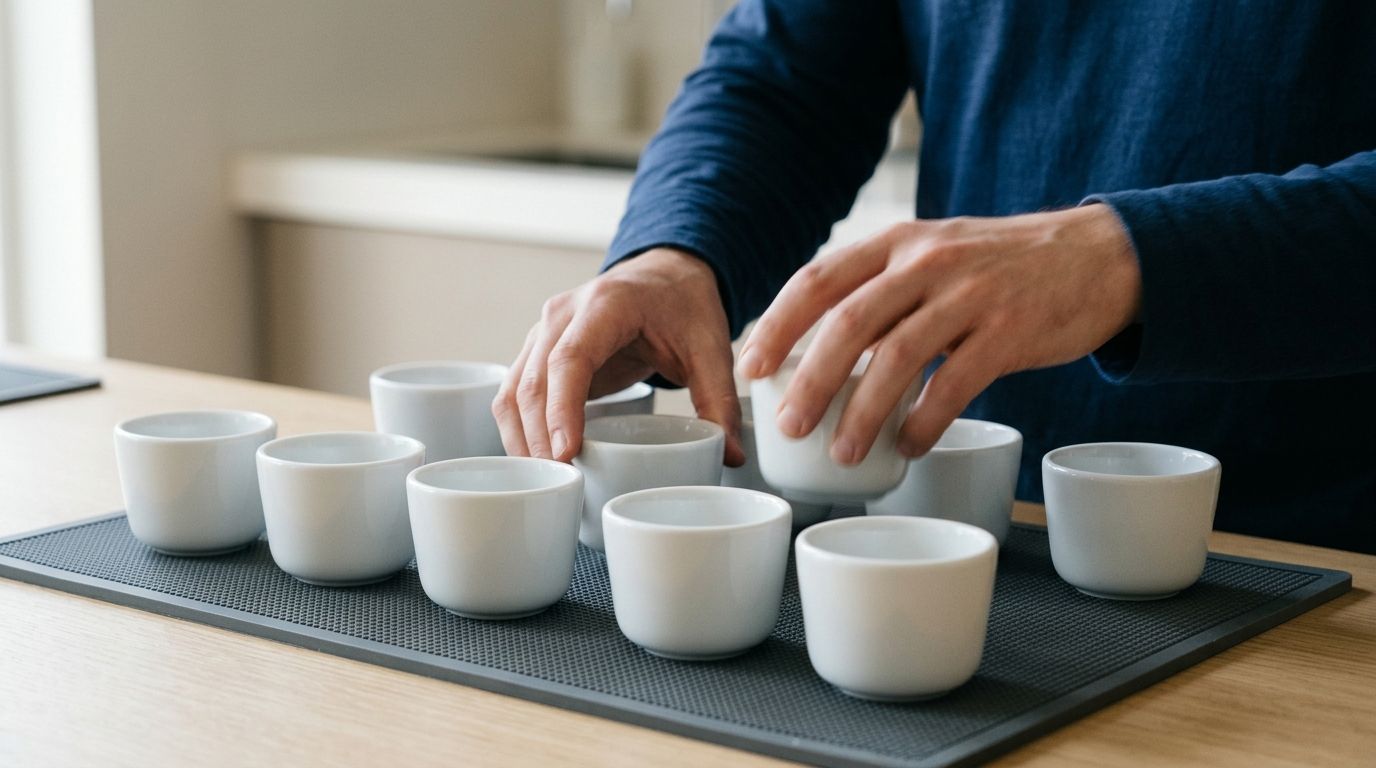
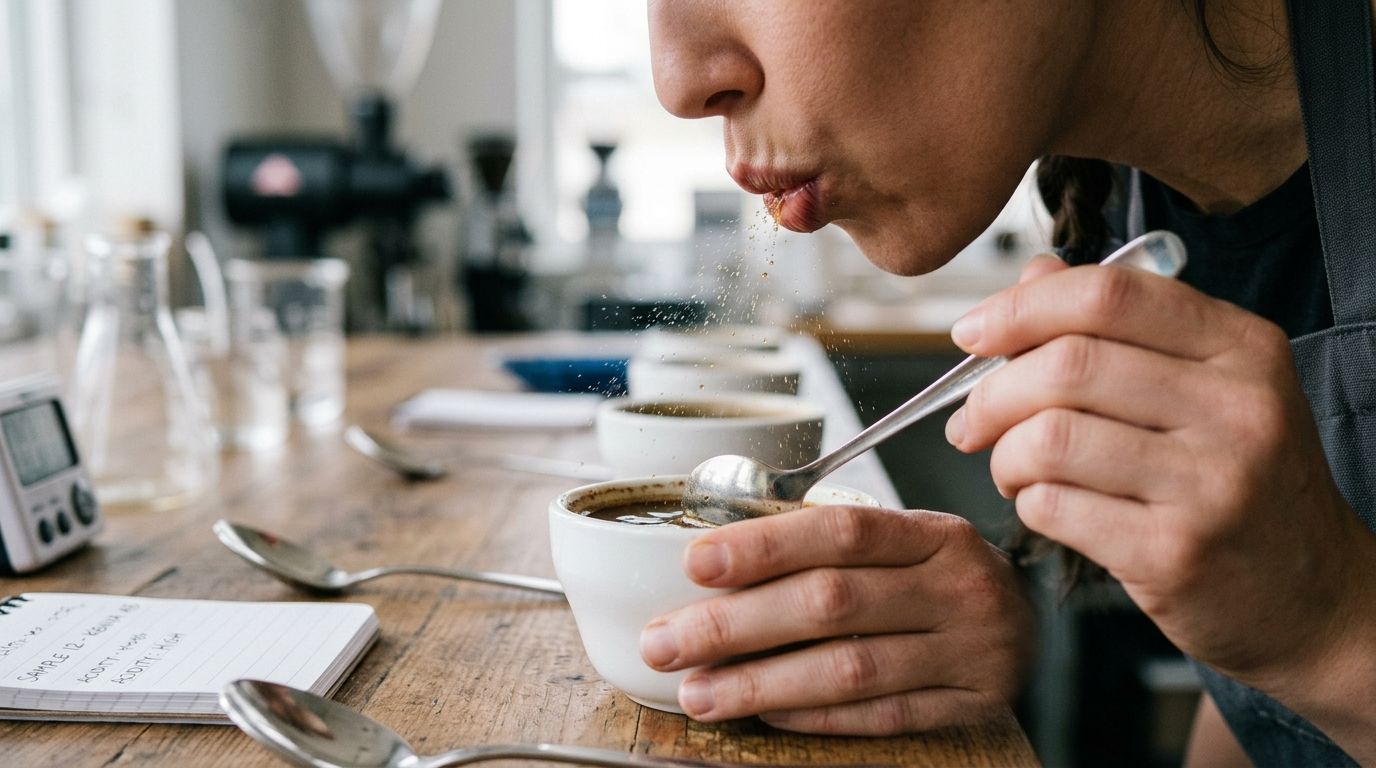
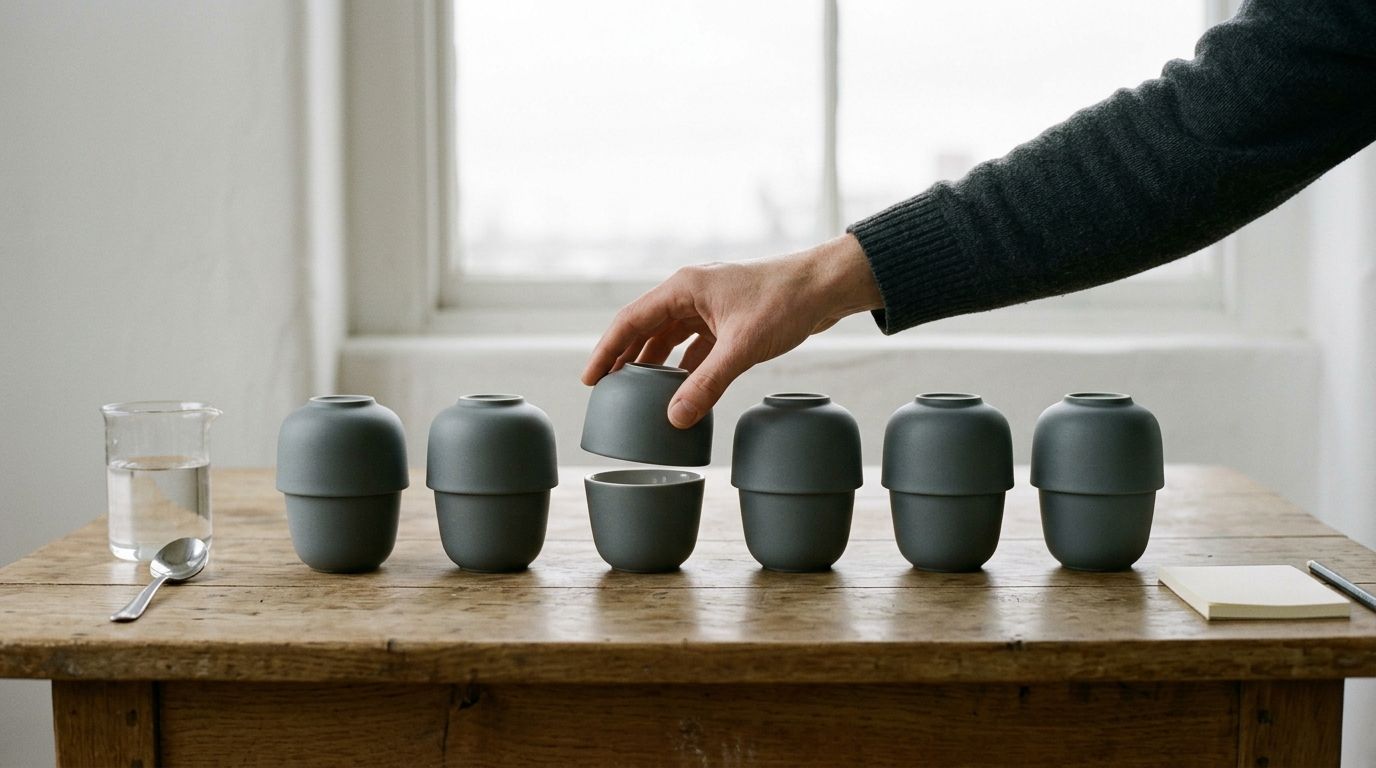
To combat this, the coffee industry relies on strict blind tasting protocols, known as cupping. In professional grading, the coffee is ground and evaluated in identical, often opaque bowls, with no information provided regarding the origin, processing method, or roaster.
When stripped of visual and linguistic context, tasters are forced to rely solely on their raw sensory data. Blind tasting frequently yields shocking results, humbling experienced professionals who discover they cannot accurately distinguish a highly-touted Geisha varietal from a cleanly processed, high-altitude blend once the label is removed. It is the ultimate exercise in sensory honesty.