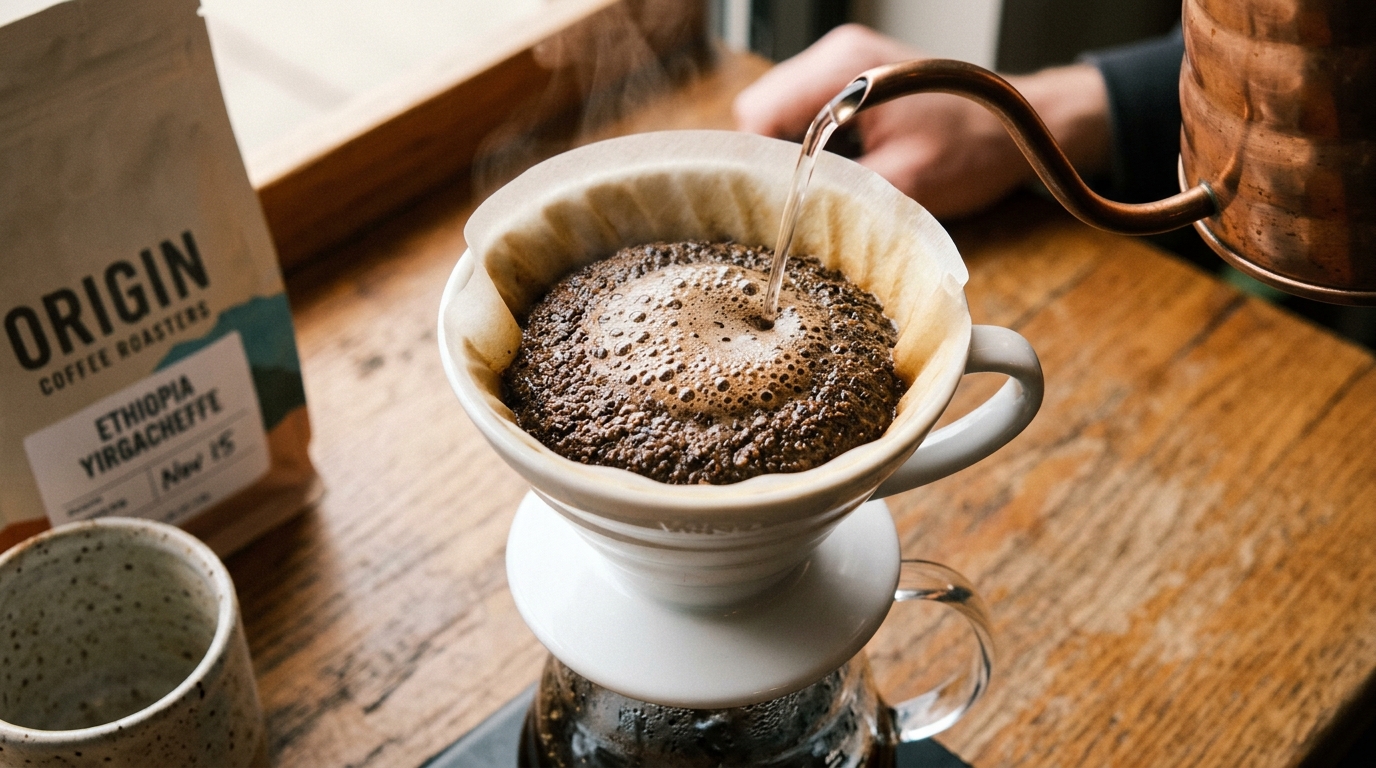








The global popularity of cold brew relies on a method of extreme patience: steeping coffee grounds in cold water for 12 to 24 hours. The resulting beverage is undeniably smooth and chocolatey, but it is often entirely devoid of terroir, fruit notes, and complex acidity. To preserve the soul of a specialty coffee over ice, one must look to the Japanese Flash Brew method.
Cold water is a poor solvent for extracting the bright, volatile fruit acids (like citric and malic acids) that define high-end light roasts. Hot water is required to pull these delicate compounds from the bean.
The Japanese method involves brewing with hot water directly over a calculated volume of ice. As the hot, perfectly extracted coffee strikes the ice, it undergoes an immediate thermal shock. This rapid plunge in temperature instantly locks in the volatile aromatics before they have a chance to evaporate into the atmosphere.
The result is a cold beverage that tastes vividly of its origin—sparkling, complex, and aromatic. While cold brew is an exercise in slow oxidation and muted flavors, flash brewing is an exercise in precision thermodynamics, capturing the fleeting brilliance of hot coffee and freezing it in time.