





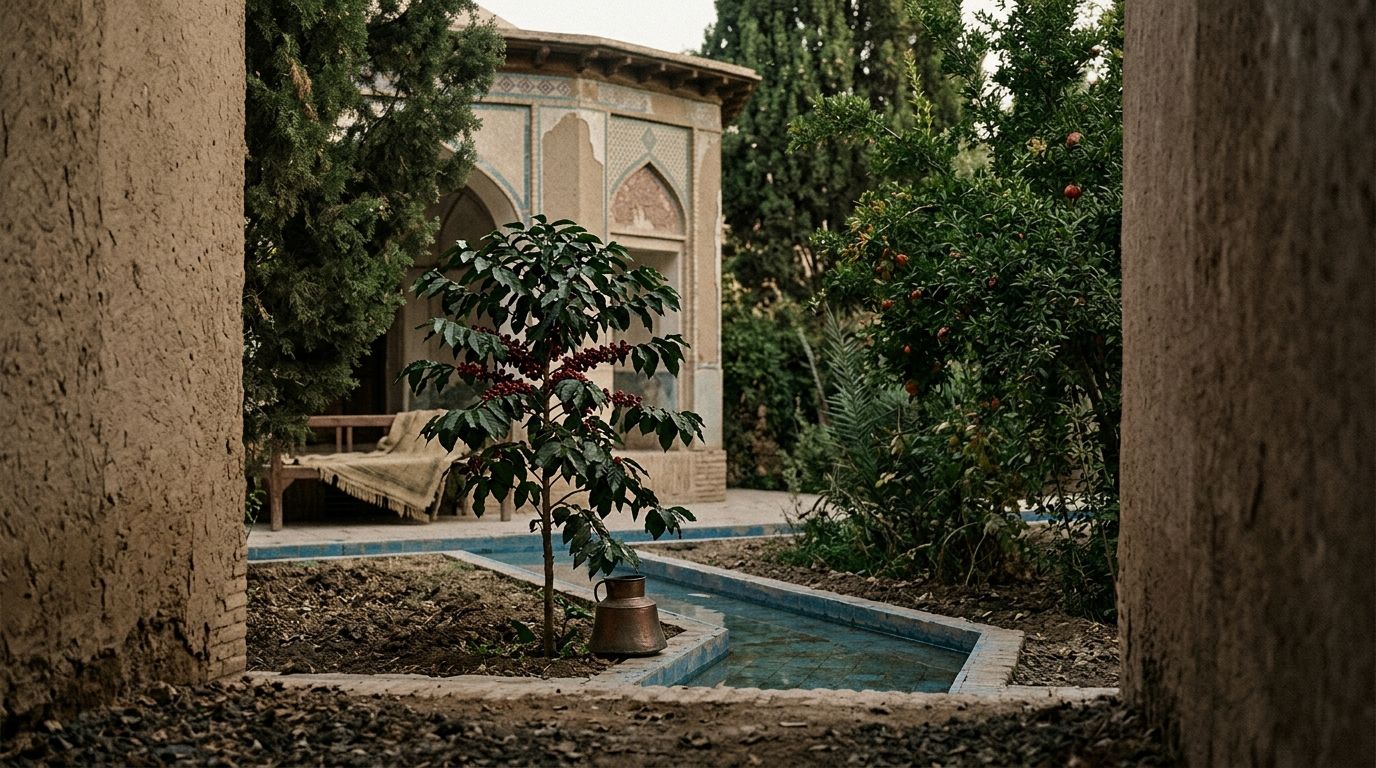
The first problem was the fruit. Nobody in the garden knew what it was supposed to become.
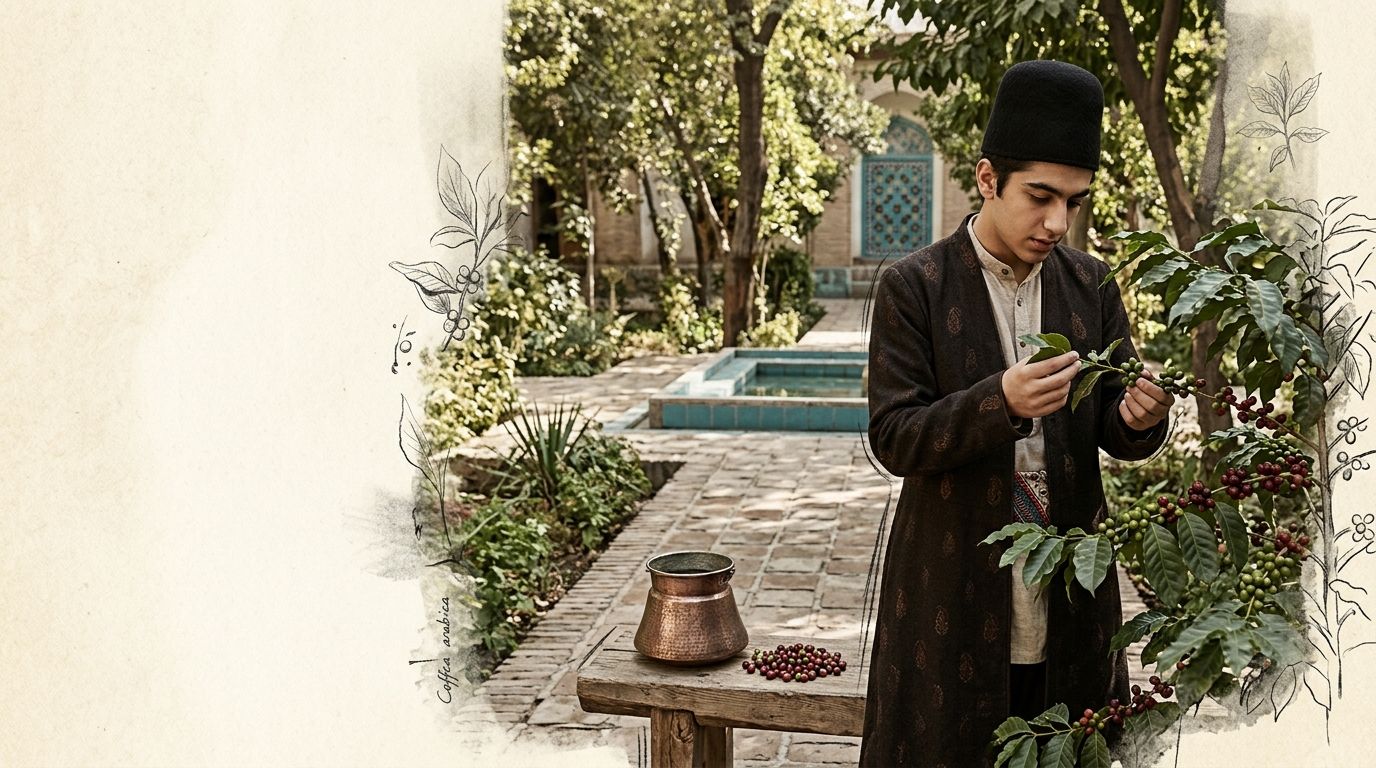
Somewhere outside the dust-choked summer limits of 19th-century Tehran, a master gardener stood beneath a shrub that should not have been there, rolling a crimson berry between his calloused fingers. It looked like a stunted cherry. It felt dense, unyielding. He did not know if it was poison, a medicine, or a joke played by the foreign merchants who frequented the royal court.
His master, a minor prince of the Qajar dynasty with a severe addiction to botanical novelties, had demanded the impossible. He wanted a coffee garden.
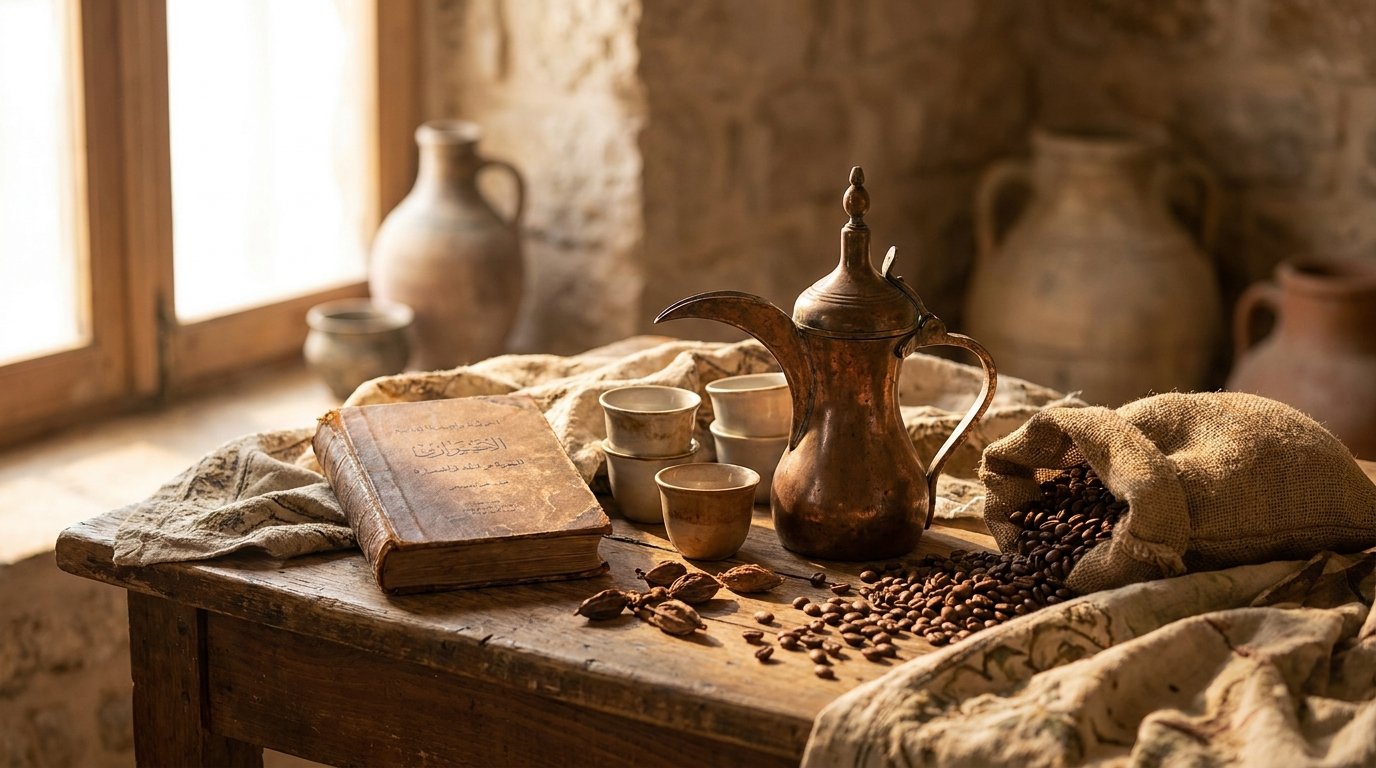
For decades, the dark, intoxicating elixir of coffee had flowed into Persia from the ports of Yemen and India. It was a beverage of prestige, roasted and brewed in the qahveh-khanehs (coffeehouses) and the inner sanctums of the aristocracy. But it was an imported luxury. To grow it on Persian soil—to master the exotic seed—would be the ultimate display of aristocratic dominion over nature.
The Architecture of an Illusion
The Persian garden, the Chahar Bagh, is a masterpiece of geometric control. It is an engineered paradise, designed to impose order on a harsh, arid landscape through the precise manipulation of shade and flowing water. But coffee, Coffea arabica, is a creature of the tropical understory. It demands humidity, volcanic soil, and a climate that knows neither the brutal, baking heat of the Iranian summer nor the bone-snapping frost of its winter.
To force the plant to survive, the prince’s gardener had to build an illusion.
He constructed high mud-brick walls to block the searing southern winds. He planted fast-growing poplars and plane trees to create a dense, artificial canopy, mimicking the shaded highlands of Ethiopia. Irrigation channels, fed by deep underground qanats, were diverted to flood the roots of the foreign shrubs twice a day, attempting to simulate equatorial rainfall.
Against all botanical odds, a few of the smuggled seeds took root. For three years, they grew into glossy, dark-leaved bushes hidden in the most secure quadrant of the estate. The prince would visit them at dusk, admiring the white, jasmine-scented blossoms that briefly snowed across the branches.
He believed he had conquered the exotic. He had no idea how fragile his victory was.
The Geography of Frost
The downfall of the secret garden was not a lack of water, but the inescapable reality of geography.
Tehran rests at the foothills of the Alborz mountains. While its summers are fierce, its winters possess a quiet, lethal bite. In the late autumn of the fourth year, the sky turned a bruised, metallic purple. The temperature plummeted overnight.
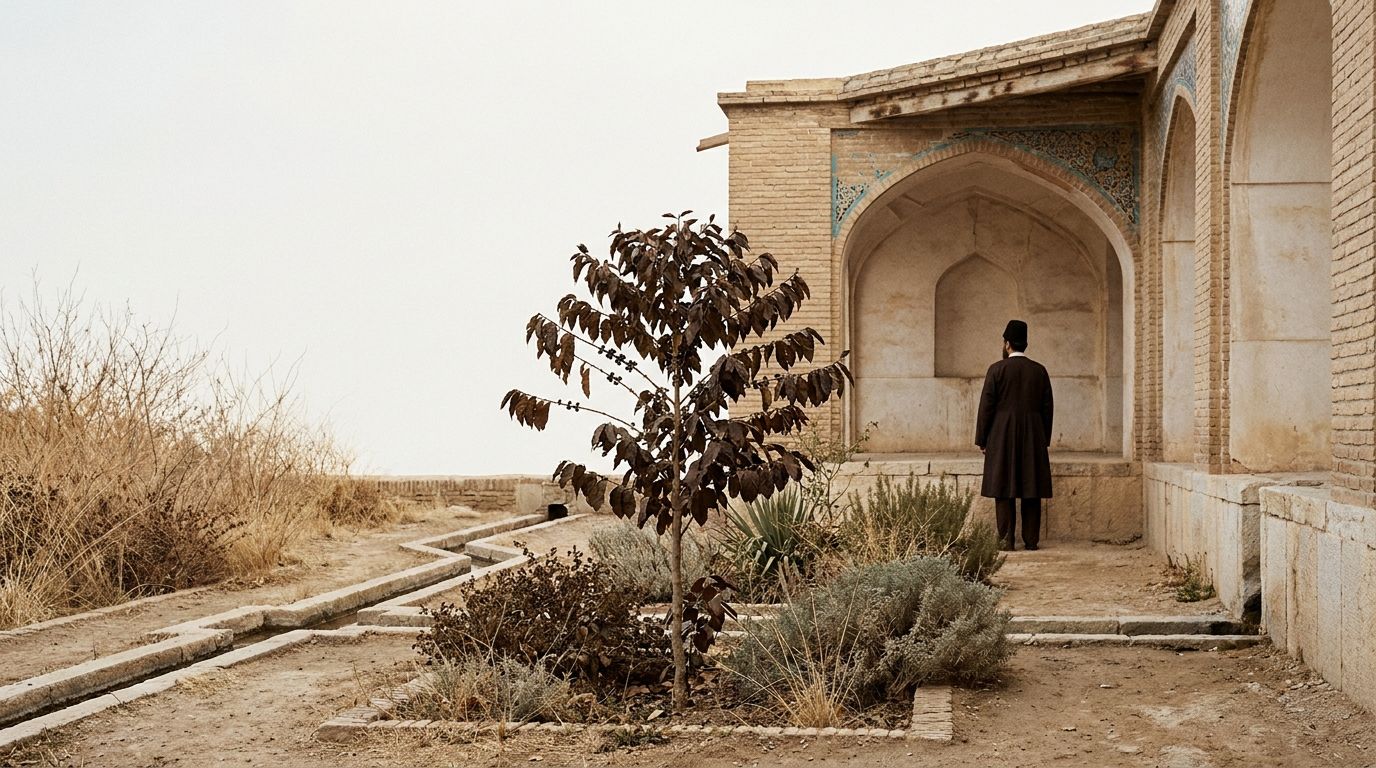
Coffee trees lack the genetic memory to survive a freeze. The water inside their cellular walls crystallized, expanded, and ruptured the delicate vascular tissues. When the gardener walked into the enclosure the next morning, the glossy leaves had turned a sickening, translucent black. The crimson berries—the very first harvest, the proof of the prince’s triumph—were shriveled and ruined on the branch.
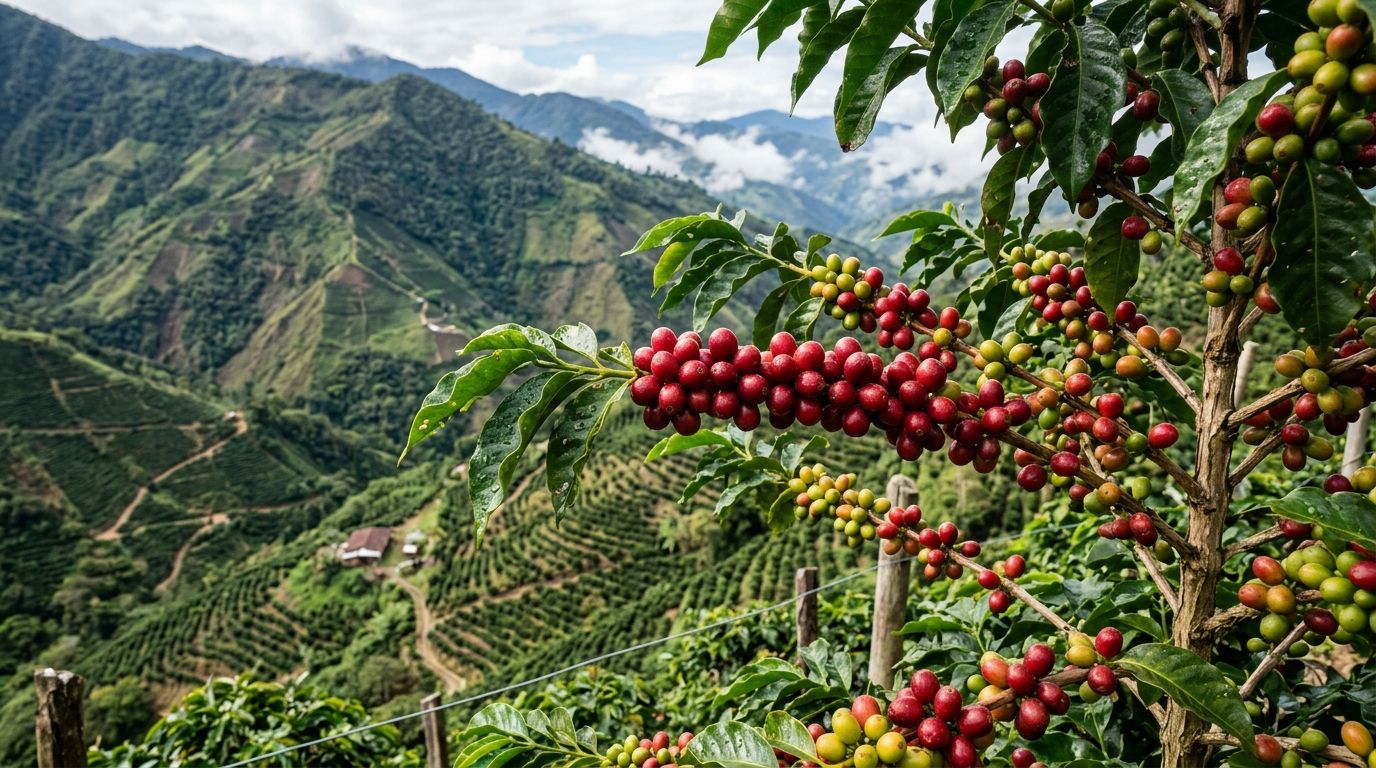
The experiment was over in a matter of hours.
The Silent Erasure
In aristocratic circles, failure is rarely acknowledged; it is simply buried.
When the prince was informed of the disaster, there was no mourning for the lost botanical miracle. There was only the swift, brutal mechanics of erasure. The dead shrubs were uprooted before the week was out, their foreign wood burned in the estate’s vast ovens to heat the bathhouse.
The soil was turned, the deep irrigation channels were filled, and within a month, a dozen native pomegranate saplings were planted in the exact footprint of the secret coffee garden. When guests arrived the following spring, they praised the prince for his beautiful pomegranates. He smiled, offered them a cup of imported Yemeni coffee, and never spoke of the shrubs again.
Historical Reality
While the Qajars were renowned for importing Western technology, cameras, and exotic plants to modernize their estates, there is no surviving historical record of a successful, or even a failed, coffee plantation near Tehran. The climate of the Iranian plateau makes outdoor coffee cultivation physically impossible. However, the culture of the era—defined by immense wealth, curiosity, and a desire to possess the foreign—makes the attempt a highly plausible, if unrecorded, folly.
The QHVE Question
If a society possesses the wealth to import the world, what other botanical ghosts are buried beneath the ancient, walled orchards of modern cities?
Sources:
- Amanat, Abbas. Pivot of the Universe: Nasir al-Din Shah Qajar and the Iranian Monarchy.
- Matthee, Rudi. The Pursuit of Pleasure: Drugs and Stimulants in Iranian History, 1500-1900.
- Hobhouse, Penelope. Gardens of Persia.
SEO & Meta
SEO Title: The Secret Qajar Coffee Garden | Persian Coffee History
Meta Description: Explore a historical fiction reconstructing a Qajar prince’s ambitious, doomed attempt to cultivate coffee in a 19th-century Persian garden.
URL Slug: secret-qajar-coffee-garden
Tags: Qajar Dynasty, Persian Gardens, Coffee Cultivation, History, Botany
Primary Search Intent: Informational / Storytelling
Related Search Queries: History of coffee in Iran, Qajar era gardens, did Persia grow coffee, Persian agricultural history.
Social Version
Instagram / X Hook: Did 19th-century Persia have a secret coffee garden? The Qajar aristocracy possessed the wealth to import the world, but the climate of the Iranian plateau answers to no king. This is the story of an aristocratic obsession, an impossible botanical illusion, and a secret garden that had to be erased. Read the reconstruction at QHVE.
Short-form Video Concept:
- 0:00 - 0:05: Cinematic slow pan across a dusty, ancient mud-brick wall in Iran. (Voiceover: “In the 19th century, a Qajar prince demanded the impossible.”)
- 0:05 - 0:15: Close-up of hands holding a single red coffee cherry, intercut with Persian geometric tiles. (Voiceover: “He wanted to grow coffee in a desert.”)
- 0:15 - 0:25: Sounds of rushing water, shadow play of leaves on a wall. (Voiceover: “They built an illusion. Artificial shade. Endless water. And for a moment, it worked.”)
- 0:25 - 0:40: The color grades cold and blue. Sound of a freezing wind. (Voiceover: “But coffee has no memory for snow. The winter slaughtered the garden in a single night.”)
- 0:40 - 0:50: (Voiceover: “What happened to the dead trees? They were burned, and replaced with pomegranates. History erased.”) Logo appears.