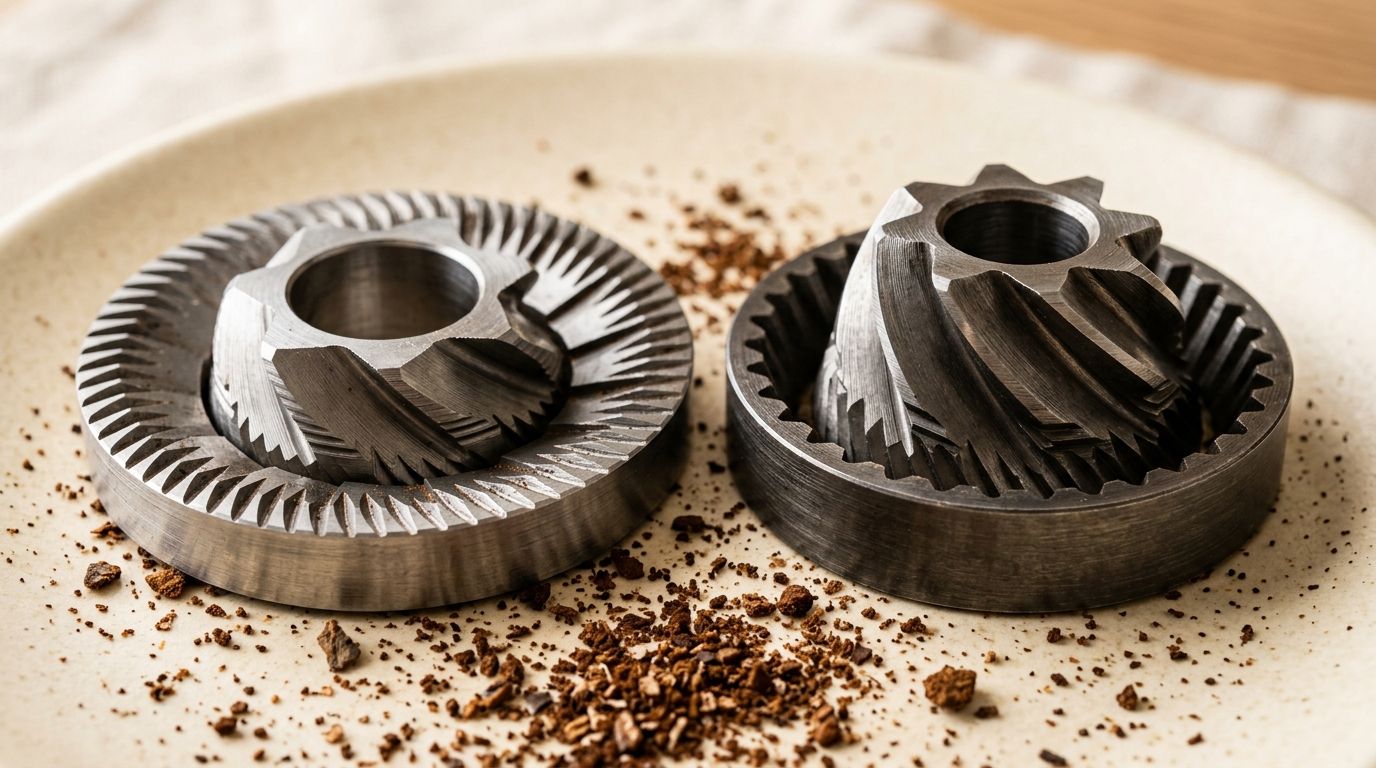









The holy grail of coffee equipment engineering is a grinder that produces a perfectly uniform particle size—a mythical “unimodal” peak where every single grain of coffee is exactly 600 microns wide. If this could be achieved, extraction would be mathematically flawless.
However, this goal is physically impossible. The limitation does not lie in the precision of the steel burrs or the alignment of the motor axis; the limitation is the coffee bean itself.
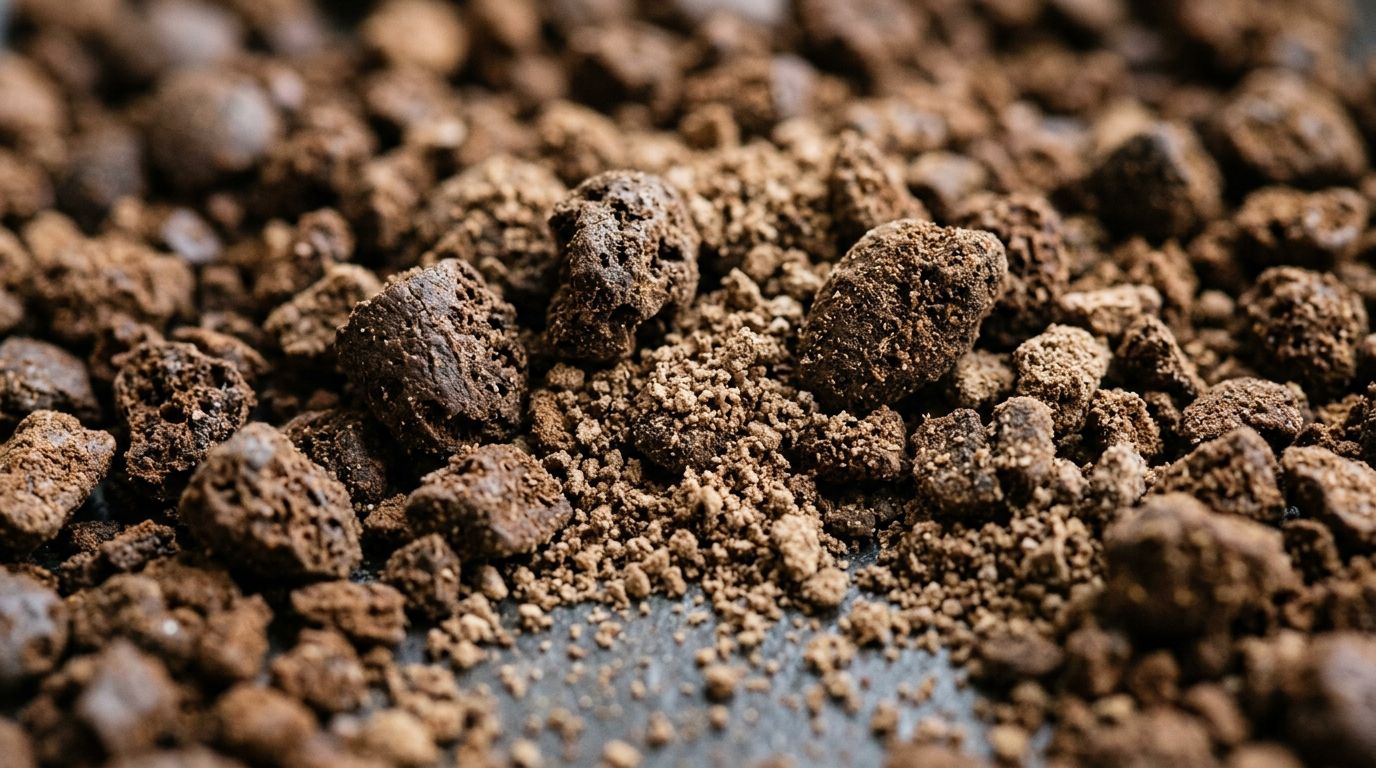
A roasted coffee bean is an organic, brittle, and highly porous cellular matrix. When it is introduced to the mechanical violence of grinding burrs, it does not slice neatly like an apple. It shatters like glass. This shattering inevitably creates microscopic dust particles (“fines”) and larger, unbroken chunks (“boulders”).
Laser diffraction particle size analysis of even the world’s most expensive grinders reveals a bell curve. Engineers can narrow this curve, reducing the outer extremes of boulders and fines, but the shattering nature of roasted cellulose guarantees that a spread will always exist.
Ironically, a small amount of this imperfection is structurally necessary. Without fines to restrict the flow of water, pulling a traditional 9-bar espresso would be virtually impossible. We must embrace the chaos of the shatter.