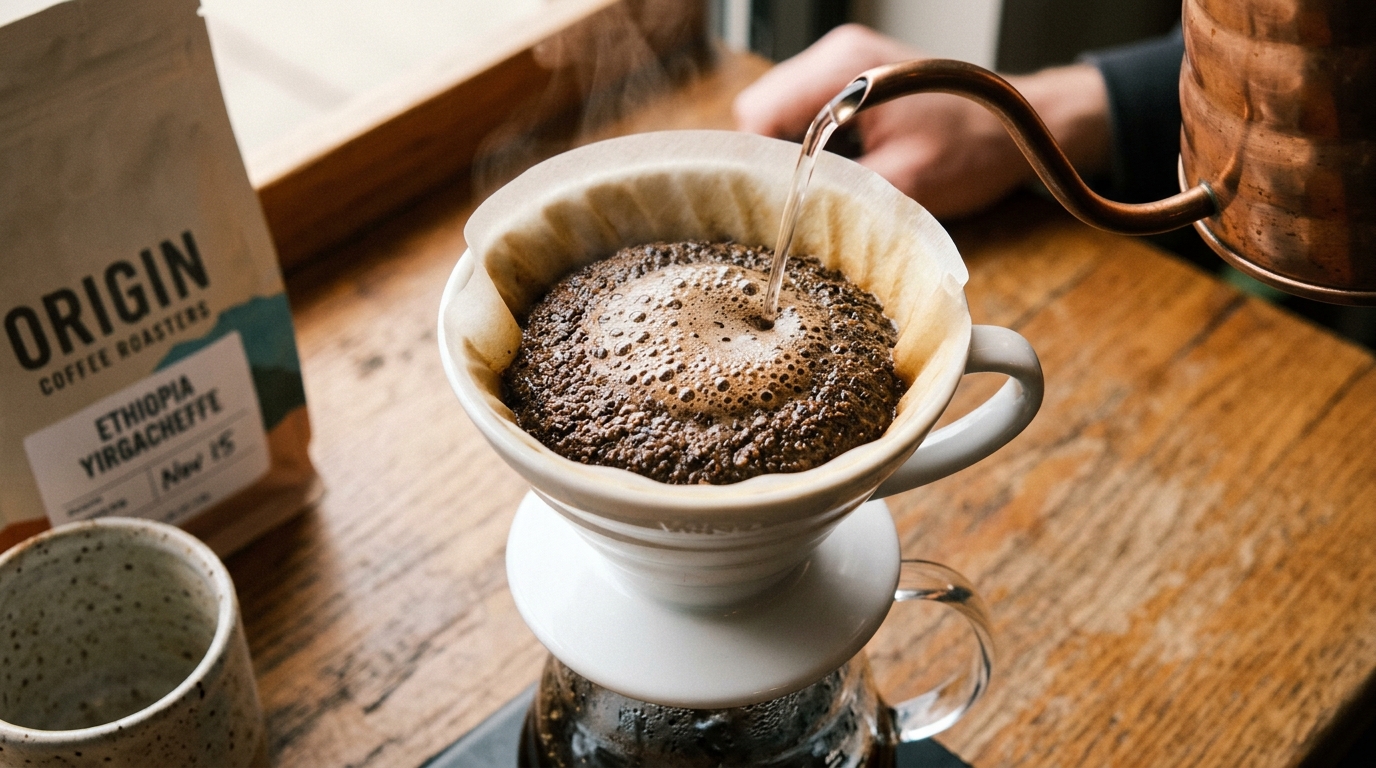







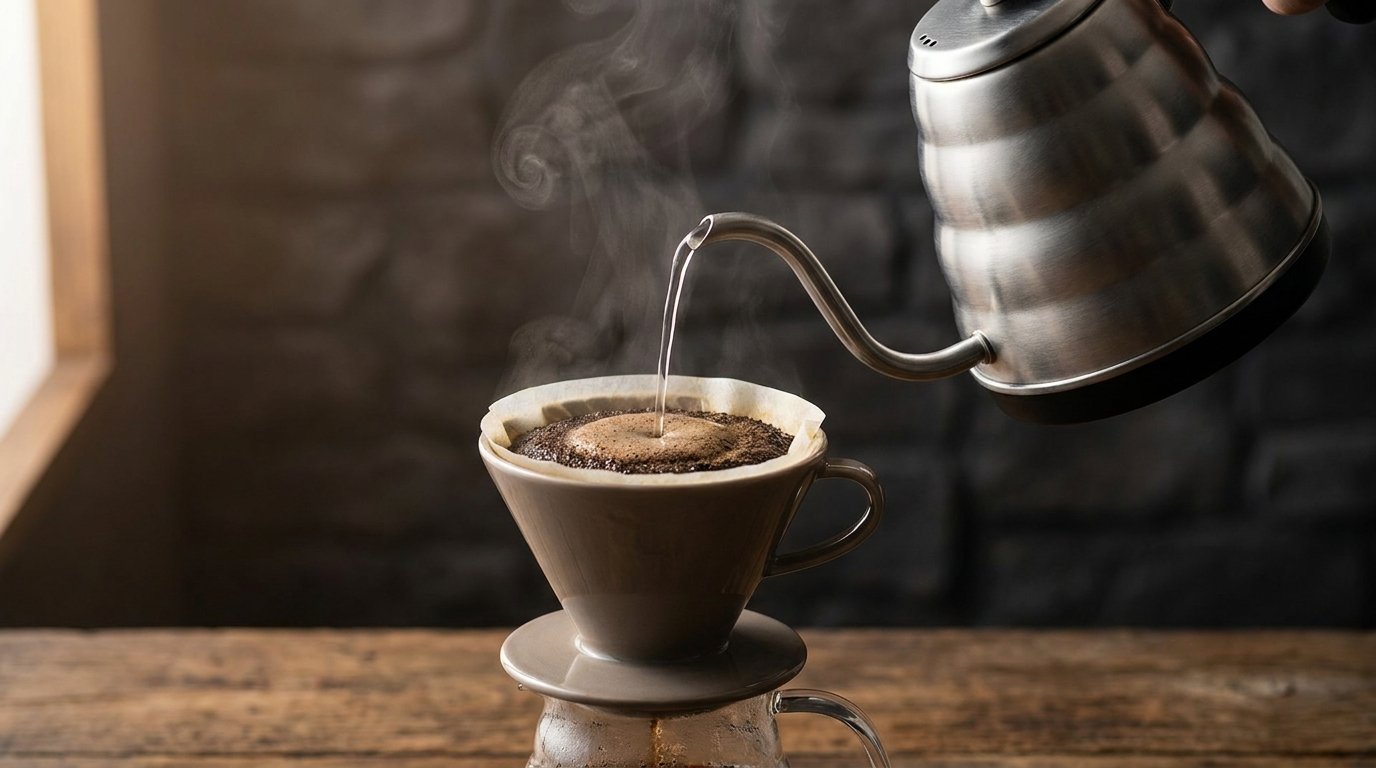
In pour-over brewing, the kettle is not simply a vessel for transferring hot water; it is a tool of mechanical agitation. The shape of a gooseneck spout is designed specifically to restrict flow, transforming chaotic, splashing water into a precise, laminar stream.
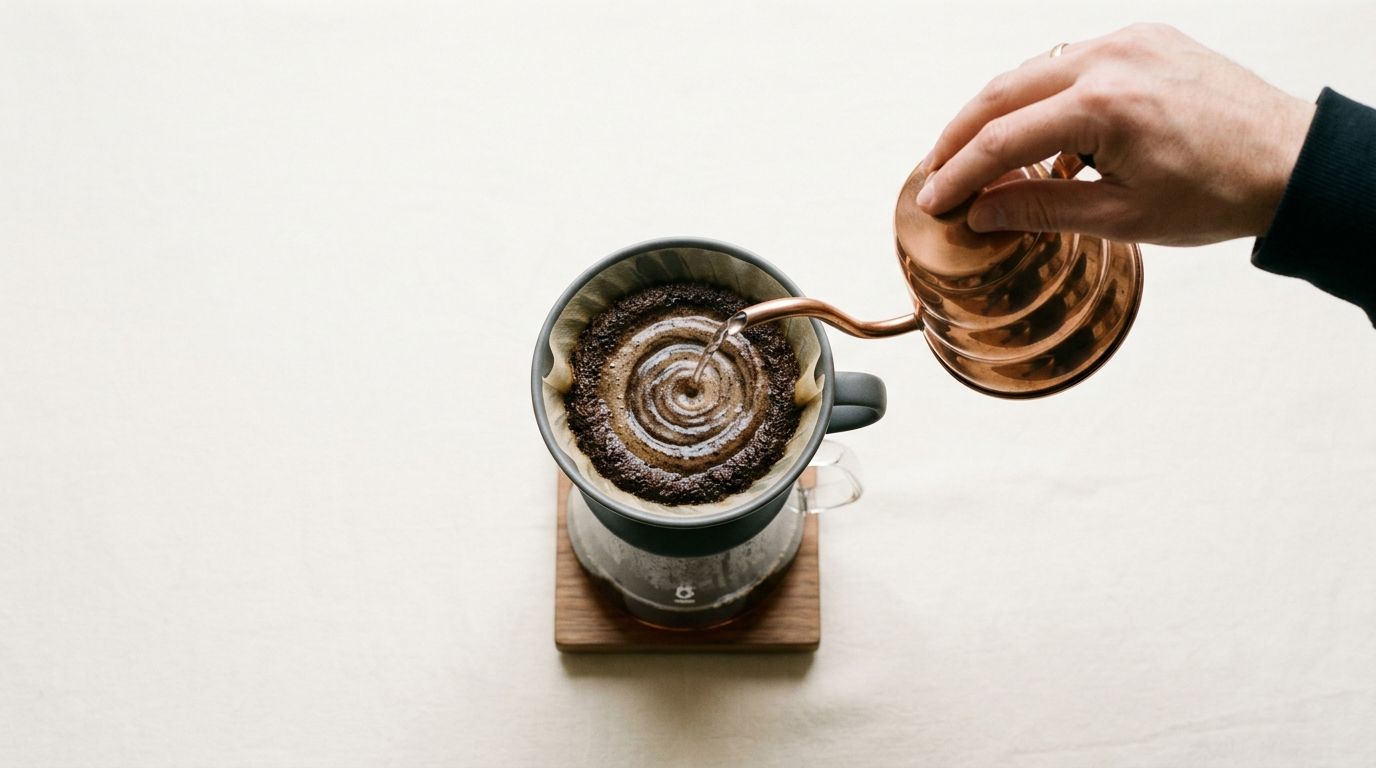
The geometry of your pour—the height from which the water falls, the speed of the flow, and the pattern of the circles—dictates the kinetic energy introduced to the slurry. A high, aggressive pour plunges deep into the coffee bed, churning the grounds and drastically increasing extraction through physical turbulence. However, if the pour is too aggressive, it risks pushing fine particles to the bottom of the filter, clogging the paper and stalling the brew.
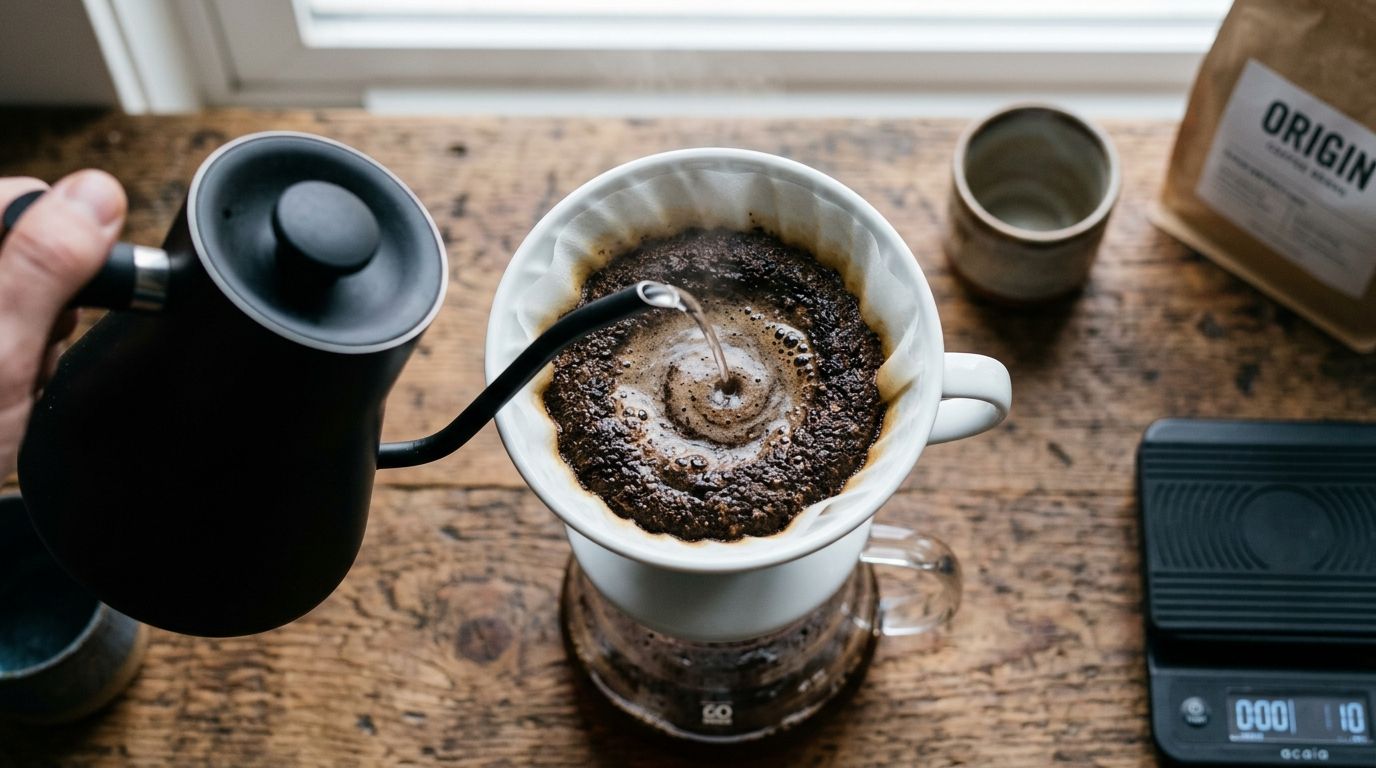
A low, gentle pour disturbs the bed minimally, resulting in a cleaner, more delicate extraction but risking an under-extracted center if the water fails to penetrate the entire depth of the grounds.
Mastering manual brewing requires treating the stream of water as a physical object. The barista must use the flow to maintain a flat, even bed of coffee, ensuring that every particle is exposed to the same amount of solvent for the same amount of time. It is an exercise in applied fluid dynamics.