





Espresso
The quintessential foundation of modern coffee, demanding precision, balance, and intense focus.

Preparation & Purging
Warm your portafilter and purge the group head with a brief burst of hot water. This stabilizes the temperature and cleans residual coffee oils. Dry the portafilter basket completely.
Grinding & Dosing
Weigh exactly 18g of coffee beans and grind them directly into the portafilter. The grind size should be exceptionally fine—feeling like powdered sugar with slight grit between your fingers.
Distribution & Tamping
Use a WDT tool to break up any clumps, ensuring an even density across the basket. Level the bed, then apply firm, perfectly level pressure with your tamper. The goal is a uniform puck with no weak spots.
Extraction
Lock the portafilter into the group head and immediately start the brew process and timer. You are aiming for approximately 36g of liquid espresso in 25 to 30 seconds.
Observation & Service
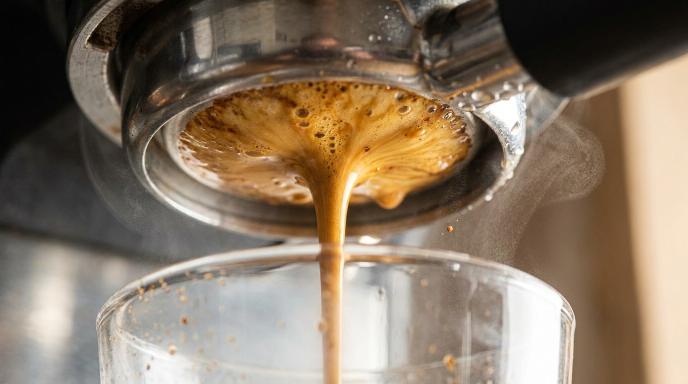
Watch the flow; it should begin as a slow, dark drip and transition into a steady stream resembling warm honey, lightening in color towards the end. Serve immediately in a pre-warmed ceramic cup.
Espresso is not merely a beverage; it is a concentrated expression of the coffee bean’s inherent terroir. Invented in Italy to brew coffee expressly for the customer, it relies on intense pressure to extract volatile flavor compounds and emulsify natural oils, creating the characteristic thick, golden crema.
Understanding the balance between dose, yield, and time is crucial. The 1:2 ratio is a modern standard, providing a balanced starting point. If the shot tastes sharply sour (under-extracted), grind finer or increase the yield slightly. If it tastes dry and unpleasantly bitter (over-extracted), grind coarser or reduce the yield. Perfecting espresso is an ongoing dialogue with your equipment and your coffee.