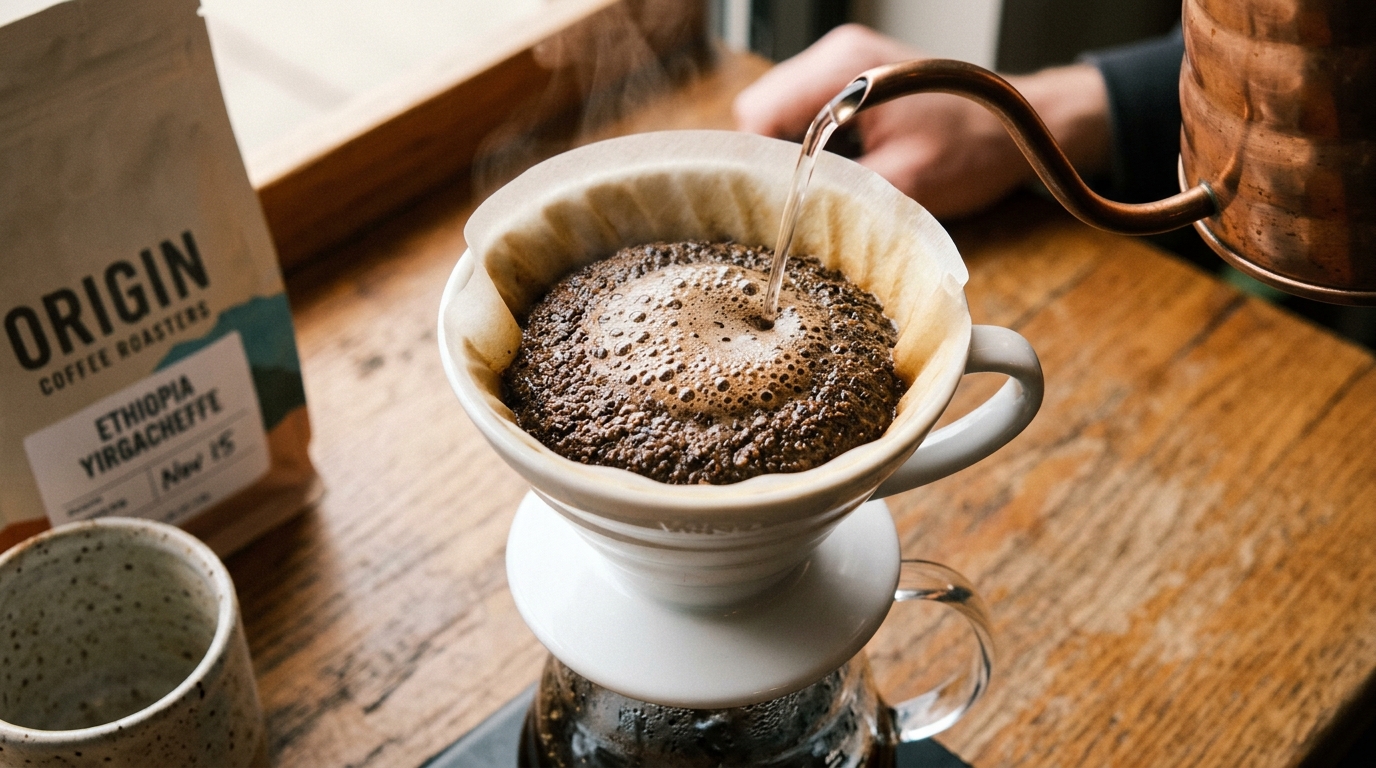







We obsess over the burrs of our grinders and the mineral content of our water, but we often overlook the final gatekeeper of extraction: the paper filter. A filter is a microscopic net, and the material and density of its weave heavily influence both the physical texture and chemical balance of the final cup.
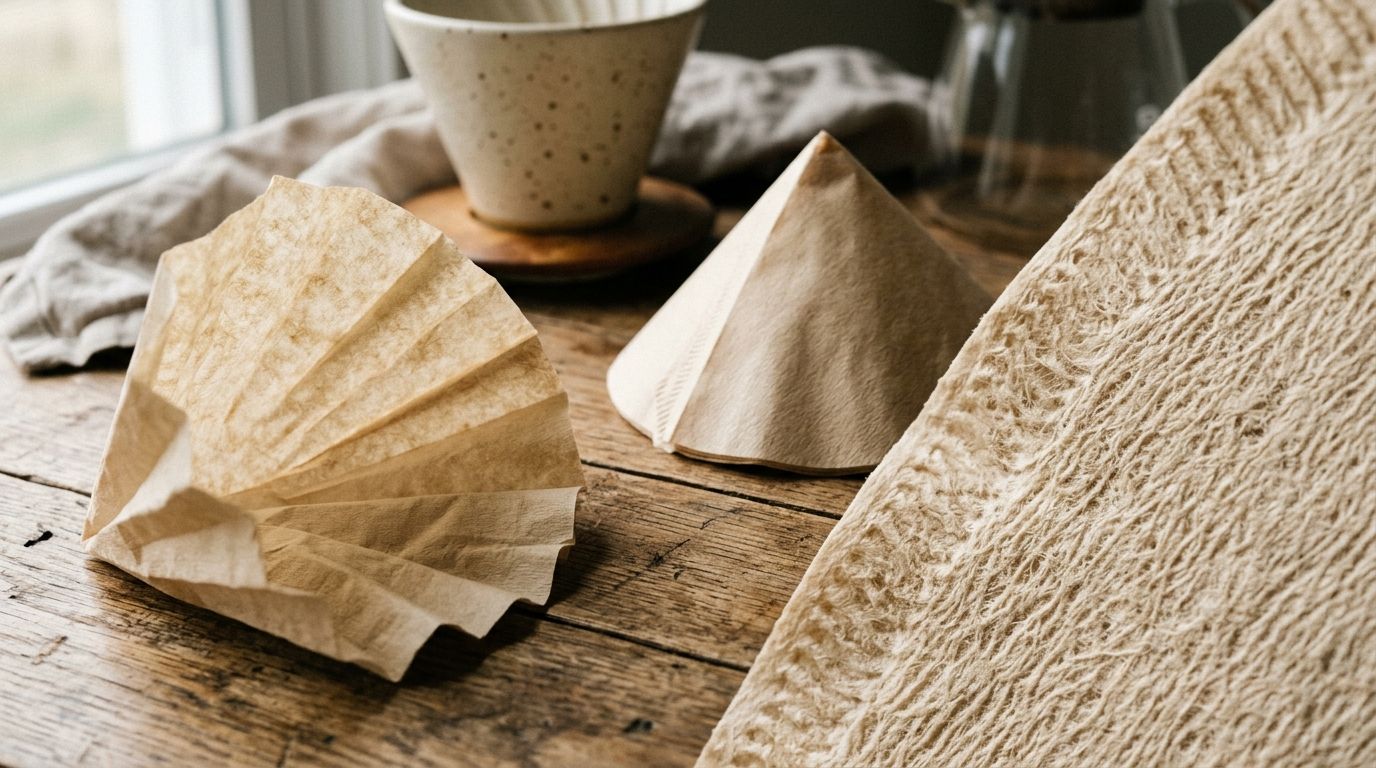
Traditional paper filters are made from wood pulp. These fibers are relatively short and create a dense, highly restrictive web. This slows the flow rate of the water (increasing contact time and extraction) while aggressively trapping the natural oils and heavy insoluble particles of the coffee. The result is a clean, tea-like body.

Modern specialty filters often utilize Abaca (Manila hemp) fibers. Abaca fibers are significantly longer and more porous than wood pulp. This creates a more open architectural structure, allowing water to pass through much faster. This rapid flow rate allows the barista to grind much finer—increasing surface area and extraction—without stalling the brew.
Furthermore, different paper densities trap different amounts of diterpenes (coffee oils). A thick, heavily woven paper will strip almost all oils, resulting in maximum clarity. A thinner, more porous paper will allow some lipids to pass through, contributing a silkier, heavier mouthfeel.